MMU Student Guide – Everything for Manchester Metropolitan University Students

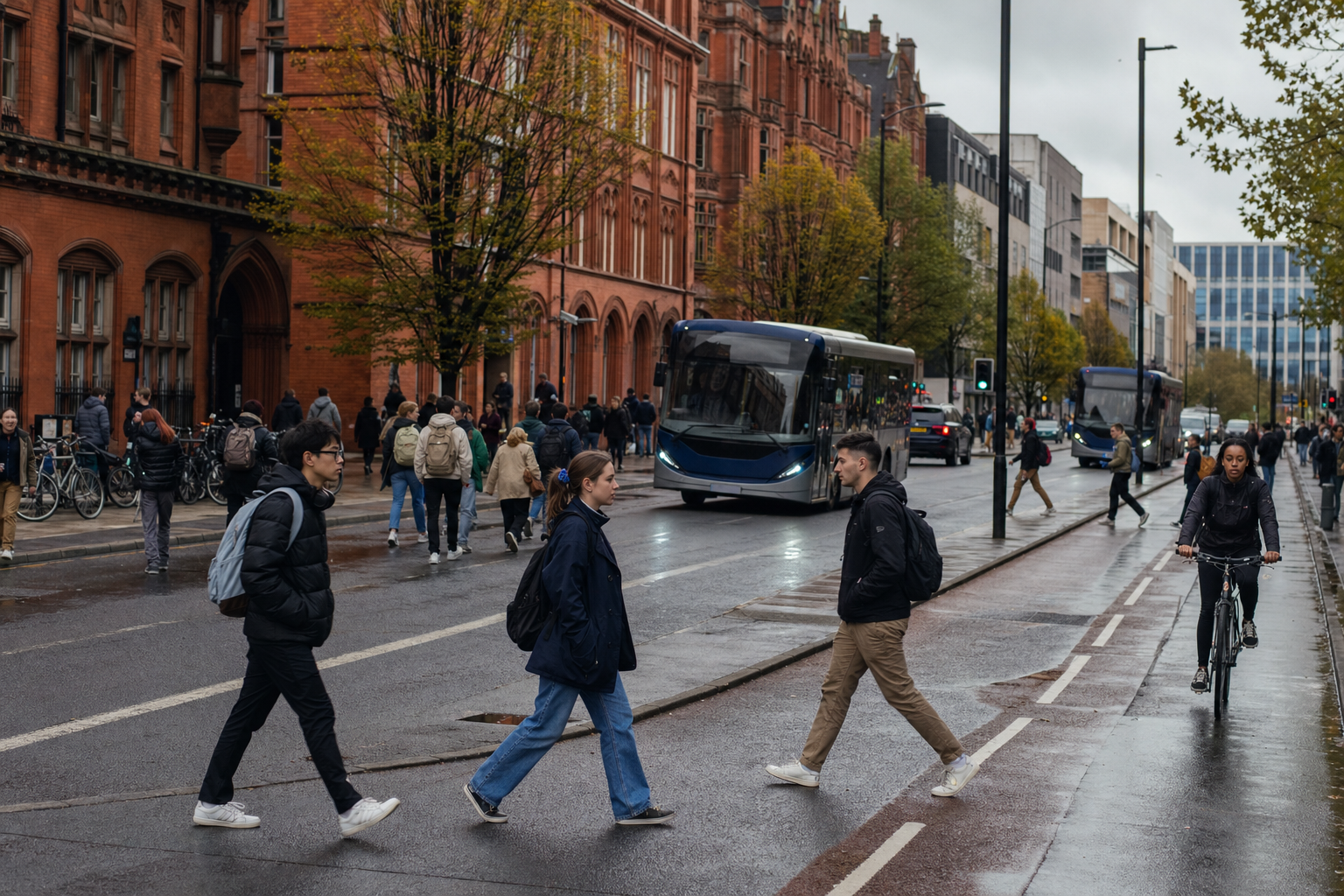
Manchester Metropolitan University has around 38,000 students across two main campuses – All Saints in the city centre and Birley in Hulme. MMU’s reputation has quietly climbed for years. The university is particularly strong in creative arts, business, education, health sciences, and architecture. If you’re at MMU, this is your guide to the city.

The Campuses

All Saints

MMU’s main city centre campus. Runs from Oxford Road near the junction with Booth Street West down through Grosvenor Square and the Business School. Key buildings: the Business School, the Geoffrey Manton Building, the Manton Building, Benzie Building (art and design), and the Sandra Burslem Building. The MMU library at All Saints is well-stocked and typically less crowded than UoM’s main libraries.

Birley

In Hulme, 20 minutes’ walk south of All Saints. This is where education, health, social care, and psychology students do most of their teaching. The campus is modern (opened 2014) with a strong sports centre, the Brooks Building, and good student accommodation on site. The 147 bus connects All Saints to Birley in about 10 minutes.

Where else

MMU used to have campuses in Didsbury (closed 2014) and Crewe (closed 2019). All teaching is now at All Saints or Birley.

MMU Halls

MMU runs around 4,000 bed spaces across halls:

  • Birley Campus Accommodation: On the Birley campus itself. Modern, purpose-built, en suite rooms. £175-210/week including bills. Best for Birley-based students.
  • Cambridge Halls: In Hulme, close to Birley. Similar pricing. Walking distance to both Birley and All Saints.
  • Liberty Heights: City centre PBSA. Close to All Saints. More expensive but very convenient.
  • Ormond Building / Lincoln Court: City centre options.

For second year onwards, MMU students typically move to Hulme, Fallowfield, Rusholme, or city centre flats. See our area comparison – Hulme is often the best option for MMU students given its proximity to All Saints.

The MMU SU

MMU Students’ Union is smaller than UoM’s but increasingly active. The SU runs 200+ societies, sports clubs, the student media (Humanity Hallows magazine and MCR Life), and welfare services. The SU bar (63 Grosvenor Street) is the main on-campus drinking spot. The annual MMU awards and graduation ball are significant social events.

Getting to Campus

If you live in the city centre: walk. All Saints is 10-15 minutes from anywhere in the NQ or Deansgate area. If you live in Hulme: walk or 147 bus (for Birley) or 15-minute walk (for All Saints). If you live in Fallowfield or Rusholme: 42/142 bus runs through Oxford Road – get off at All Saints.

For Birley specifically, the free MMU shuttle bus connects All Saints to Birley for MMU students. Check the MMU travel pages for current timetables.

MMU Strengths by Department

Some of MMU’s genuinely excellent departments that don’t always get the recognition they deserve:

  • Manchester Fashion Institute: UK-leading for fashion design, marketing, and buying. Alumni include Henry Holland, Sarah Burton, Ella Emhoff. The degree shows are open to the public and worth visiting.
  • Manchester School of Art: Based in the Benzie Building. Strong reputation in fine art, illustration, and interactive design. The art school runs open studios annually.
  • Manchester Metropolitan Business School: Triple-accredited (AACSB, AMBA, EQUIS) – one of only a handful of UK business schools with all three. Recruiters take it seriously.
  • School of Education: One of the biggest teacher training providers in the country. Very strong employment outcomes.
  • School of Architecture: RIBA-accredited. The Benzie architecture studios are impressive.
  • Manchester School of Theatre: Highly respected – alumni include Julie Walters, Bernard Hill, Steve Coogan.

MMU Student Support

  • Student Hub: Online portal and physical location at All Saints. One-stop for enrolment, finance, accommodation, and welfare queries.
  • Counselling and Mental Health: Free service, book through the student hub. Group workshops and 1-to-1 sessions. See our mental health guide.
  • Careers and Employability (Career Zone): CV reviews, mock interviews, employer events. MMU’s employability focus is one of its genuine strengths.
  • Ask US: SU advice service for housing, finance, academic appeals.
  • MMU Health Centre: GP surgery for MMU students at the 56 Hathersage Road practice. Register in week one.

Money at MMU

  • MMU Bursary: Means-tested, up to £1,000/year for qualifying students. Automatic.
  • Hardship fund: Available through the Student Hub for unexpected financial difficulty.
  • Part-time work: MMU’s internal jobs portal lists campus roles. The Birley sports centre and library jobs are popular. See our jobs guide.
  • Textbooks: Library first, then Facebook buy/sell groups. Most MMU modules have reading lists available on the learning platform before term starts.

MMU-Specific Traditions and Events

  • Varsity Week: The annual sports battle with UoM. Rugby, football, netball, hockey, the lot. Atmosphere is strong.
  • MMU Awards: End-of-year celebration for student achievements. Organised by the SU.
  • Degree shows: Art, design, architecture, fashion, and theatre degree shows in May-June are open to the public. The Manchester Fashion Institute show in particular draws industry.
  • MancunianFest: MMU’s freshers music festival.

How MMU Differs from UoM

Some honest differences, from students who know both:

  • Campus feel: MMU is more urban and integrated with the city centre. UoM has a more contained academic quarter feel on Oxford Road.
  • Class sizes: MMU tends to have smaller seminars in creative and practice-based subjects. UoM’s big lecture courses (economics, law, medicine) can have 300+ student cohorts.
  • Teaching style: MMU is often more practice-focused – placements, industry briefs, live projects. UoM’s traditional academic departments lean more research-oriented.
  • Social scene: UoM has the Fallowfield halls effect – thousands of first-years in one area creating an intense social density. MMU’s halls are more distributed so social life is a bit more self-organised.
  • Employment: Graduate employment rates are similar for comparable subjects. MMU’s creative industries links are stronger; UoM’s corporate and professional services links are stronger.

MMU Reads on MCR City

Free Manchester newsletter

Manchester in
your inbox

The best events, restaurants, nightlife, music and culture in Manchester, curated weekly by locals who know the city inside out.

Interests:
No spam, ever Every Thursday Free forever

About MCR │ Everything Manchester

MCR is Manchester's all-in-one city guide and events platform. We list thousands of events in Manchester every month, from live music and club nights to restaurant openings, art exhibitions and sport fixtures across Greater Manchester. Whether you're looking for free things to do or planning a weekend in the city, MCR has you covered.

Discover Manchester

From the independent shops and street art of the Northern Quarter to the canal-side restaurants of Ancoats, the cocktail bars of Deansgate and the village charm of Didsbury. Explore every corner of Manchester with our neighbourhood guides, curated city stories and real-time what's on listings.

© 2026 MCR | Everything Manchester · Made in Manchester Manchester's City Platform