3Dec
Tickets
Skip to Ancoats content
Add a listing
Manchester area
Ancoats
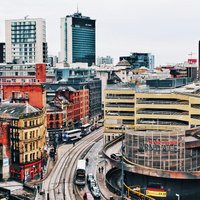
Ancoats is known today for converted Victorian cotton mills turned into homes, offices, restaurants and bars, an acclaimed independent food and drink scene including Michelin-starred restaurant mana, and the New Islington canalside regeneration around the Rochdale and Ashton canals.
5 upcoming events listed2 places verified2 stories
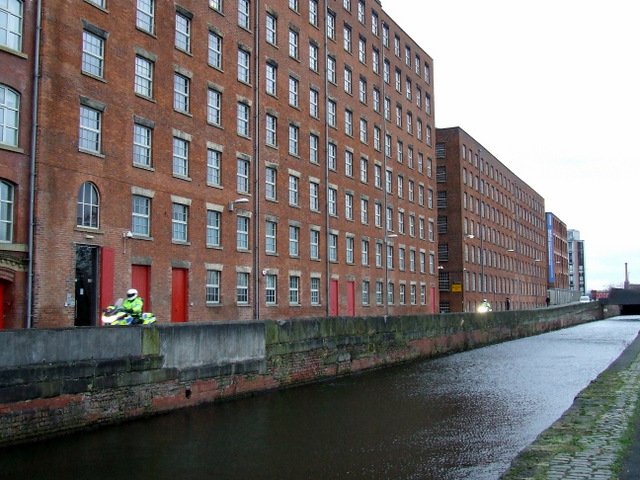
Image: Sedgwick Mill, Ancoats by Thomas Nugent (CC BY-SA 2.0)
Ancoats, honestly
Ancoats is a former industrial district immediately northeast of Manchester city centre, in England. The name is thought to derive from the Old English 'ana cots', meaning lonely cottages, and the area was first recorded as 'Elnecot' in 1212. Cotton mill construction began in Ancoats as early as 1790, and the opening of the Rochdale Canal in 1804 accelerated industrial development. By 1815 Ancoats was described as the most populous district in Manchester, and the 1851 census recorded a population of 53,737, larger than the towns of Bury or Blackburn at the time. Surviving mills from this period include Murrays' Mills on Redhill Street, built from 1798 and among the earliest steam-powered cotton mills in the world, and Beehive Mill on Jersey Street, dating from 1820 to 1824. Ancoats also drew large numbers of Irish and Italian immigrants during the 19th and early 20th centuries; the area around St Michael's Church became known as 'Little Italy', with a community that grew from around 180 families in 1895 to roughly 3,000 by 1910. The cotton industry collapsed through the 1930s and slum clearances in the 1960s emptied much of the district, leaving many mill buildings vacant by the later 20th century. Manchester City Council designated the Ancoats Conservation Area in June 1989. Since the 1990s the area has undergone substantial regeneration, including the 31-acre New Islington redevelopment around the Rochdale and Ashton canals, led by developer Urban Splash with the city council, which began housing residents from 2006. Former mills have been converted into apartments, offices and restaurants, and the pedestrianised Cutting Room Square, completed in 2009, now sits at the centre of the neighbourhood. Ancoats today combines converted industrial buildings, canalside housing, independent restaurants and bars, and cultural venues including Halle St Peter's, a former church that serves as the rehearsal home of the Halle orchestra.
Written and last reviewed 10 Sep 2026 by Group CEO
Use Ancoats, do not just read about it
Save the area, share a meeting point, or build a simple local loop from real places already on this page.
Starter loop
A simple way into Ancoats
- 01Start hereFlawd Wine Bar
- 02Keep movingSkof
- 03Finish nearbyCity Centre (nearby area)
An orientation loop built from listings on this page, not live directions. Open each stop for current details.
Nothing here matches that. Clear the filters to see everything in Ancoats, or search the whole city.
On in Ancoats
All Ancoats eventsChecked between 4 Oct 2026 and 13 Oct 2026
Places in Ancoats
Details checked between 27 Apr 2026 and 28 Apr 2026
A short list for now: only places checked against a real address are shown.
Flawd Wine Bar
Flawd is a natural wine bar on Cutting Room Square in Ancoats, and the outdoor terrace is one of the best places…
Skof
Skof sits on Blossom Street in Ancoats and is the first solo project from Tom Barnes, who spent years as head chef…
Where these are
7 mapped locations in Ancoats
- Kneecap, Manchester
- Kneecap – Fenian World Tour, Manchester
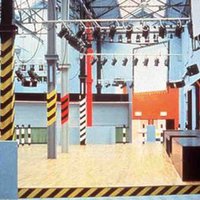
- The Haçienda, Manchester
- WHP Presents: TIËSTO
- WHP presents STEPPERS [Concourse Only]
- Flawd Wine Bar
- Skof
Area centre 53.48503, -2.22784
Schematic plot of the listed locations. It is not a street map and is not to scale.Open the full map
Written about Ancoats
The 25 Best Restaurants in Manchester Right Now
Our definitive guide to where to eat in Manchester in 2026 - from Michelin-starred Mana to the Curry Mile.
Ancoats, How Manchester’s Most Deprived Area Became Its Most Desirable
How Ancoats changed from industrial Manchester to one of the city's most desirable neighbourhoods, with mills, canals, food, housing and local tension.
Local context
Background for getting your bearings in Ancoats.
- mana - Restaurant at 42 Blossom Street that became Manchester's first Michelin-starred restaurant in over 40 years after opening in 2018, run by chef-owner Simon Martin.
- Rudy's Neapolitan Pizza - The original Rudy's pizzeria opened on Ancoats' Cotton Street in 2015, the first location of what has since grown into a multi-site pizza chain.
- Halle St Peter's - A Grade II listed former church on Blossom Street, built in 1859, deconsecrated after its congregation shrank around 1960, and restored and reopened in 2013 as the rehearsal home of the Halle orchestra.
- Hope Mill Theatre - Independent theatre inside the Grade II* listed Hope Mill, a former steam-powered cotton mill dating from 1824; the theatre opened in November 2015 and won Fringe Venue of the Year at The Stage Awards in 2018.
- The Horsfall - Creative and gallery space on the site linked to Thomas Horsfall's 1877 Manchester Art Museum in Ancoats, reopened in 2017 and run by mental health charity 42nd Street.
- Murrays' Mills - Cotton mill complex on Redhill Street built from 1798 by Adam and George Murray, among the earliest steam-powered cotton mills anywhere and Grade II* listed.
- Cutting Room Square - Pedestrianised square completed in 2009 at the centre of Ancoats, marked by five illuminated photographic installations, 'Sentinels', by artist Dan Dubowitz, depicting the former cutting and pattern rooms of Royal Mills.
- Crown and Kettle - Grade II listed pub on Great Ancoats Street with a drinks licence recorded from 1799, closed for 16 years after 1989 and reopened around 2005; noted for its ornate ceiling.
More areas in Manchester
Ranked by how much is listed in each, not by distance.
Add to Ancoats
This page is short of a place for Ancoats. If you know one, add it and we will check it.
Keep Ancoats right
Nothing here opens a new form. Every link goes to a page the site already runs.