
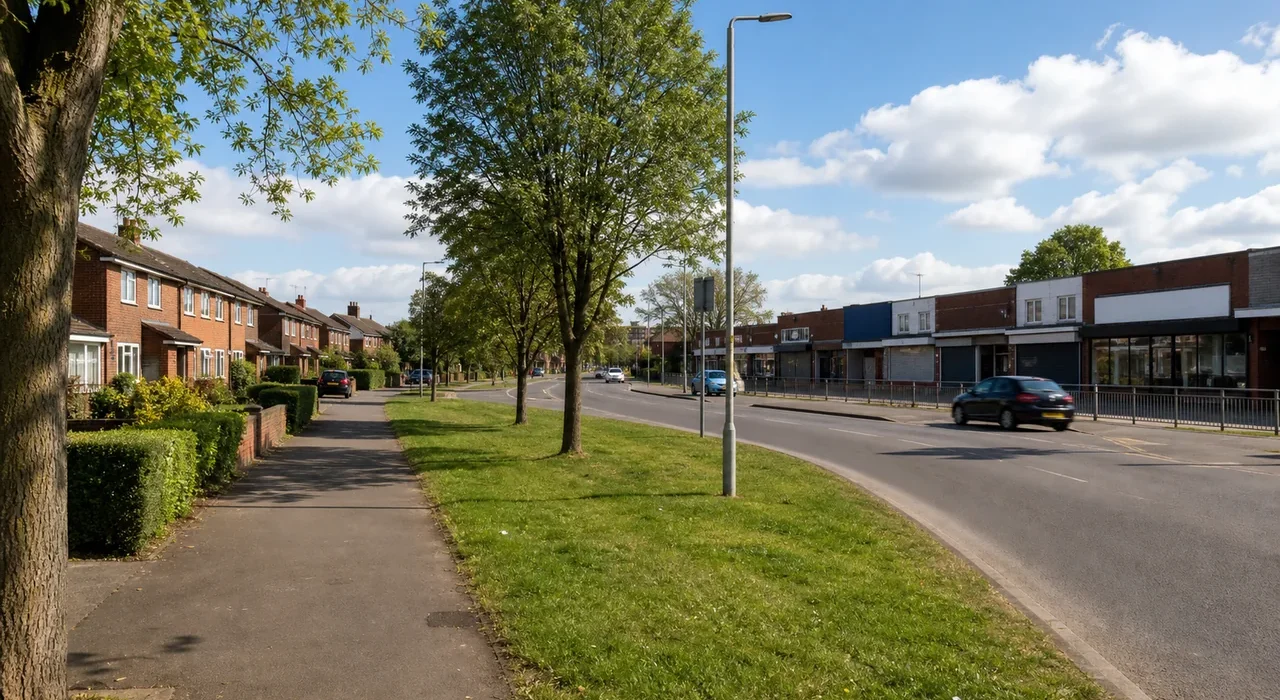
Wythenshawe was built to a plan. Manchester Corporation acquired the land in the 1920s and developed it as a garden city-style estate to rehouse families from inner Manchester’s overcrowded slums. At its peak it housed around 100,000 people – the largest municipal housing estate in Europe. Wide roads, green space, a civic centre, local industries: the plan was ambitious. What was built was more complicated than the plan and more real than the criticism it attracted.
Wythenshawe Hall
Wythenshawe Hall is a Tudor half-timbered manor house at the centre of Wythenshawe Park – the seat of the Tatton family before Manchester Corporation purchased it and the surrounding 270 acres in 1926. The hall was damaged by fire in 2016 and has been undergoing restoration since. The park around it is one of south Manchester’s most-used green spaces – a farm, walled garden and open grassland that the surrounding community uses properly rather than ornamentally.
Wythenshawe Forum and the Civic
Wythenshawe Forum is the arts and leisure centre serving the estate – theatre, gym, swimming pool, community hall. The programming is built for the local community rather than city-centre audiences. It’s the kind of civic infrastructure that was built into the original Wythenshawe plan and has been maintained even as other parts of the estate’s public infrastructure have struggled.
Manchester Airport and Jobs
Manchester Airport sits on Wythenshawe’s southern edge and is the largest single employer in the area. The Metrolink Airport line runs through the southern part of the estate. The proximity to the airport has shaped Wythenshawe’s employment landscape in ways that distinguish it from comparable council estates elsewhere – there are actual local jobs rather than a commute to a distant employment zone.
Related Manchester guides
Corrections
Spotted something wrong? Send a correction.