
Newton Heath is the part of East Manchester that Manchester United came from and largely forgot. The club was formed in 1878 as Newton Heath LYR (Lancashire and Yorkshire Railway) Football Club by workers at the Lancashire and Yorkshire Railway depot. They played on North Road, Newton Heath, in front of a few hundred railway workers. Becoming Manchester United in 1902 and moving to Old Trafford in 1910 was the beginning of the club’s separation from its origin neighbourhood.
The LYR Connection
The Lancashire and Yorkshire Railway depot that spawned the football club transformed Newton Heath from a rural township into a railway and engineering hub in the mid-nineteenth century. The workers who came to work the depot settled in the terraced streets that still exist around Ten Acres Lane and Briscoe Lane. The community that formed United was a working railway community – the opposite of the global entertainment property the club became.
Newton Heath as a Neighbourhood Now
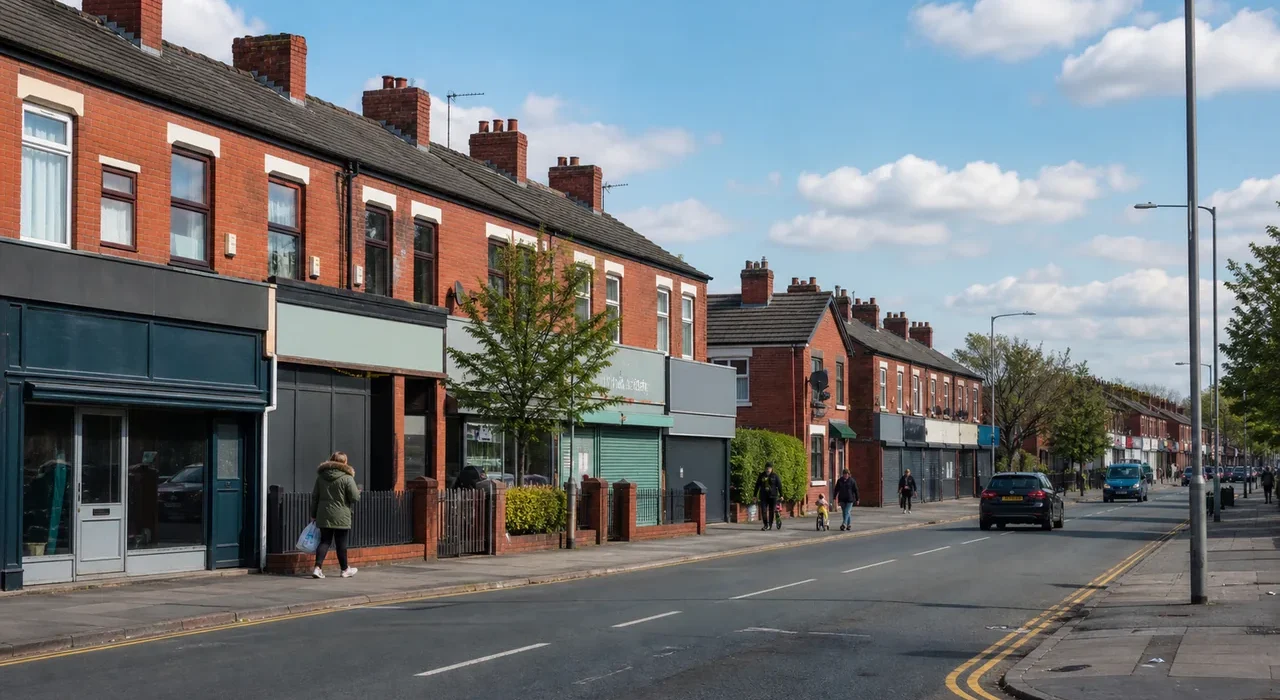
Newton Heath in 2026 is a mixed East Manchester neighbourhood – traditional white working-class community, South Asian families along the main roads, newer arrivals from Eastern Europe. It’s affordable, it has reasonable transport connections, and it has none of the self-awareness of the neighbourhoods further west. The shops on Oldham Road serve the community, the pubs are proper boozers, the parks are used by local families.
The FC United Connection
FC United of Manchester – the fan-owned club formed in 2005 by United supporters who objected to the Glazer takeover – plays at Broadhurst Park in Moston, close to Newton Heath. There’s a pleasing symmetry in the fan-owned club created in protest at the commercialisation of United having its ground in the neighbourhood where United was born. FC United games are affordable, community-oriented, and a genuinely different experience from Premier League football.
Related Manchester guides
Corrections
Spotted something wrong? Send a correction.