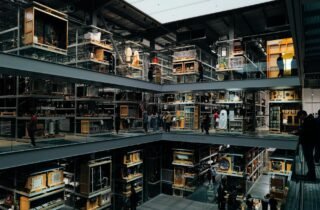


Every autumn, Manchester’s nightlife shifts. The festival season ends, the nights draw in, and the Warehouse Project opens. For twelve weeks, from late September to New Year’s Day, it dominates the conversation. The lineups are debated. The tickets sell out. The queues wrap around the building. Love it or hate it – and plenty of Mancunians have strong opinions either way – the Warehouse Project is the single most significant club night in Britain and has been for the better part of two decades.
How that happened is a story about timing, ambition, and a city that needed something to fill a very large hole.
The Gap
By the mid-2000s, Manchester’s nightlife was in trouble. The Hacienda had been gone since 1997. Sankeys, the Beehive Mill club that had carried the torch through the late 1990s and early 2000s, was losing momentum. The superclub model that had defined British nightlife in the 1990s – Ministry of Sound, Cream, Gatecrasher – was dying. Licensing laws were tightening. The smoking ban arrived in 2007. Student drinking habits were changing. Manchester still had a pub and bar scene, but for electronic music at scale, there was a vacuum.
Sacha Lord understood this. Lord had been promoting in Manchester since the late 1990s, running nights at various venues across the city. He knew the market, he knew the DJs, and he knew that Manchester’s appetite for big electronic music events hadn’t disappeared – it just didn’t have a home.
Boddingtons: 2006-2007
The first Warehouse Project season launched in autumn 2006 at the Boddingtons Brewery site on Strangeways. The brewery had closed in 2005 and the building was sitting empty. Lord and his team took it, installed a sound system, and put on club nights with lineups that drew from across the electronic music spectrum – house, techno, drum and bass, dubstep, the lot.
The concept was simple but effective: a temporary club in an industrial space, running for a limited season. The scarcity created demand. The industrial setting gave it an edge that permanent clubs couldn’t match. The lineups were ambitious from the start – this wasn’t a series of local DJ nights, it was a proper programme with international headliners.
That first season proved the concept. The events sold out. The atmosphere was raw and electric – a brewery warehouse with a big sound system and a crowd that was desperate for exactly this. Manchester hadn’t had anything at this scale since the Hacienda’s peak, and the hunger was obvious.
Store Street: 2007-2018
The Warehouse Project moved to Store Street in 2007, underneath Manchester Piccadilly station. This became its home for over a decade and the space that defined the brand. The venue was a network of railway arches – brick tunnels with low, curved ceilings that compressed the sound and the crowd into something intense and claustrophobic in the best possible way.
Store Street was divided into rooms. The main room held around 3,000 people. Room Two offered a different sound. The layout forced you through narrow corridors between spaces, creating a sense of journey that purpose-built clubs rarely achieve. The brickwork sweated. The bass vibrated through the arches. On a good night, with the right DJ and a full room, Store Street was one of the best club spaces in the world.
The limitations were part of the appeal. The toilets were portaloos. The bars were basic. Getting in involved a long queue in the cold followed by airport-style security. Getting out involved emerging onto Store Street at 4am, ears ringing, trying to find a taxi in a city where late-night transport was limited. None of this mattered when the music was right.
The lineups through the Store Street years read like a history of electronic music. Carl Cox, Richie Hawtin, Ben UFO, Four Tet, Jamie xx, Bicep, The Chemical Brothers, Aphex Twin, Skrillex – the range was enormous. WHP didn’t stick to one genre. A season might include techno marathons, grime shows off, drum and bass nights, and indie-dance crossovers. The programming reflected Manchester’s musical omnivourousness.
The Business Model
The Warehouse Project’s business model was clever. By operating as a temporary event series rather than a permanent club, it avoided the overheads that killed other venues – year-round rent, staffing, maintenance. The twelve-week season meant every night had to count. The scarcity drove ticket demand. The autumn-to-winter timing filled a gap when other events wound down.
Ticket prices rose over the years, from £15-20 in the early seasons to £40-60+ by the 2020s. VIP and table packages pushed higher. Some Mancunians grumbled that WHP had become overpriced, that the original spirit of underground warehouse raving had been commercialised into a premium product. They weren’t entirely wrong. But the events kept selling out, which suggests the market was willing to pay.
Sacha Lord’s profile grew with WHP. He co-founded Parklife festival, which became Manchester’s biggest outdoor music event. During the pandemic, he was appointed Greater Manchester’s Night Time Economy Adviser, becoming the public voice of the city’s nightlife industry. His influence on Manchester’s leisure economy is substantial.
Depot Mayfield: 2019 Onwards
In 2019, the Warehouse Project moved to Depot Mayfield, the former Royal Mail sorting depot next to Piccadilly station. The space was vastly larger than Store Street – a cavernous industrial hall that could hold up to 10,000 people. The move was controversial. Fans of Store Street argued that the intimacy would be lost, that WHP was scaling up at the expense of atmosphere.
The concerns were partly justified. Depot Mayfield is a different experience. The main room is enormous, and on nights when it’s not full, the atmosphere can feel diluted. The walk from the main room to the other spaces is long. The scale is impressive but the compression and intensity of Store Street’s brick arches is gone. You don’t get the same sense of being underground, in a space that wasn’t designed for this, where the walls are sweating and the ceiling is inches above your head.
But Depot has its own strengths. The production is extraordinary – lighting rigs, sound systems, stage design at a level that Store Street couldn’t physically accommodate. The larger capacity means bigger headliners and more ambitious programming. The multiple rooms allow for genuinely different musical experiences in one building. And the outdoor spaces provide breathing room that Store Street never had.
Homobloc
Homobloc deserves its own mention. Launched in 2019 as a queer-focused music event within the WHP ecosystem, it quickly became one of the highlights of the Manchester cultural calendar. The programming centres LGBTQ+ artists and audiences but is open to everyone. The atmosphere is joyful, inclusive, and musically adventurous in a way that mainstream club nights often aren’t.
Homobloc filled a gap that Manchester didn’t know it had. The city has a strong LGBTQ+ scene centred on Canal Street, but Homobloc offered something different – a large-scale music event with queer identity at its core rather than its margins. Acts like Roisin Murphy, Hot Chip, Honey Dijon, and Horse Meat Disco have headlined. It’s become one of the events that defines what WHP can be when it’s at its most ambitious.
The Criticisms
No honest account of WHP can ignore the criticisms. The queues are notorious – waits of an hour or more in the cold are common, particularly for headline events. The security is intense and sometimes heavy-handed. The drinks are expensive. The sound, particularly in Depot Mayfield’s larger spaces, doesn’t always match the quality of the lineup.
There’s a broader criticism too: that WHP has monopolised Manchester’s electronic music conversation. The dominance of one promoter and one brand can squeeze out smaller operators and alternative scenes. When WHP is running, it hoovers up the talent, the press coverage, and the audience. Some argue this is unhealthy for the wider ecosystem.
These are fair points. But they’re the criticisms of something that works, not something that doesn’t. The Warehouse Project exists because Manchester needed it, and it keeps going because Manchester still wants it.
What WHP Means for Manchester
Manchester’s claim to be the electronic music capital of Britain rests on a few pillars: the Hacienda’s legacy, the record shops and labels, the network of smaller clubs and venues, and the Warehouse Project. WHP is the most visible expression of that claim in 2026. When international DJs talk about the best places to play in the UK, Manchester is always in the conversation, and WHP is usually the reason.
The global standing matters. Berlin has Berghain. Amsterdam has its warehouse scene. Ibiza has the superclubs. Manchester has WHP. The seasonal model is different from a permanent club, but the cultural weight is comparable. DJs build their sets differently for a WHP headline slot. The crowd knows it. The energy reflects it.
From a derelict brewery in Strangeways to a railway depot that hosts 10,000 people, the Warehouse Project has done what the Hacienda did a generation earlier: given Manchester’s appetite for music a physical space to express itself. The methods are different, the business model is smarter, and the scale is larger. But the fundamental impulse is the same – Manchester needs to dance, and someone has to build the room.
Corrections
Spotted something wrong? Send a correction.