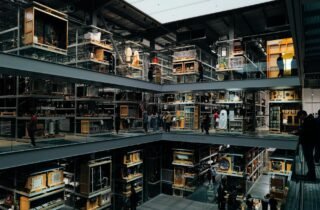
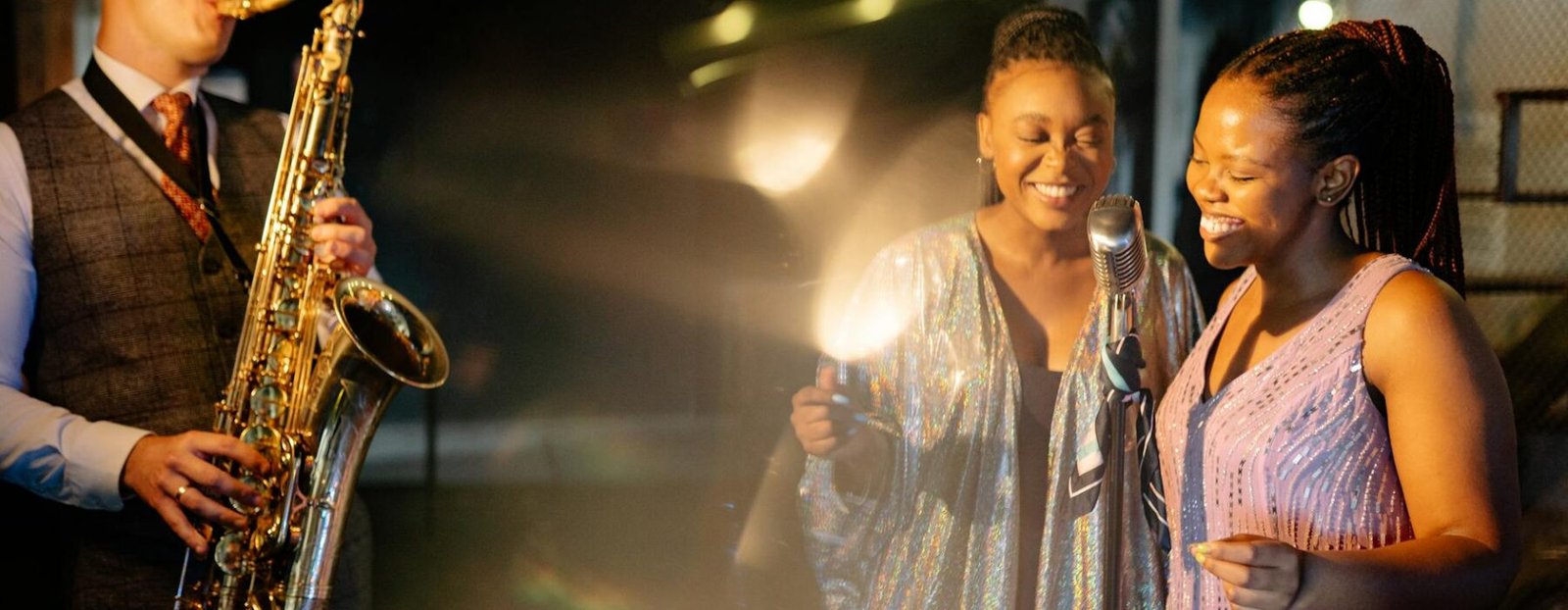
There’s a venue on Swan Street in the Northern Quarter that has been hosting live music since the 1930s. It’s been threatened with demolition, left derelict, rebuilt, expanded, and is now arguably doing the best programming of its entire existence. Band on the Wall is not the biggest venue in Manchester. It’s not the most famous. But it might be the most important, and it’s almost certainly the best small venue in England.
That’s a bold claim. It’s also defensible. Walk into Band on the Wall on any given week and you might see Malian griot musicians, a London jazz quartet, an electronic producer from Berlin, a Congolese rumba band, or a Manchester MC you’ve never heard of who’s about to blow up. No other venue in the city – possibly no other venue in the country – programmes with this range. And somehow it works. The room is always right for the music. The audience always gets it. Something about this building makes everything sound good.
The Early Days: A Pub With Ideas
The building at 25 Swan Street has been a pub since the early 1800s. The name comes from a literal band on the wall – a raised platform where musicians played above the drinkers in the main bar. It’s one of those names that sounds like a metaphor but is actually just a description. Musicians stood on a shelf. People drank below them. That was the arrangement.
Live music became a regular feature in the 1930s, and by the post-war years the venue had established itself as a jazz spot. Manchester had a serious jazz scene in the 1950s and 60s – often overlooked in histories that focus on Liverpool and London – and Band on the Wall was at the centre of it. The room was small, smoky, and intimate in the way that jazz demands. You were close enough to the musicians to see their fingers move.
Through the 1960s and 70s, the venue evolved with the city’s musical tastes. Folk, blues, rock, world music – Band on the Wall booked whatever was interesting, which meant it was often ahead of the mainstream. This wasn’t a commercial decision. The venue was too small to make serious money from any genre. It booked what it booked because someone there cared about music more than profit. That philosophy has never changed.
Punk, Post-Punk, and the Manchester Moment
When punk hit Manchester in 1976-77, Band on the Wall was one of the venues that gave it a stage. Buzzcocks played there. The Fall played there. Joy Division played there, back when they were still Warsaw and still working out what they were. Magazine, who are criminally underrated in most Manchester music histories, played early shows at Band on the Wall.
The venue’s role in the post-punk era was significant because it was one of the few places in Manchester willing to book bands that didn’t fit neatly into any category. The Hacienda gets the credit for the acid house revolution, and the Free Trade Hall gets the credit for the Sex Pistols show, but Band on the Wall was the venue where musicians could experiment without commercial pressure. If you were doing something strange and new and couldn’t get a booking anywhere else, Band on the Wall would probably have you.
This tolerance for the weird and uncommercial attracted a specific kind of musician. The Fall’s Mark E. Smith was a regular. A Certain Ratio, the Factory Records band who mixed punk with funk and electronic music, treated Band on the Wall as a home venue. The Durutti Column’s Vini Reilly played there. These weren’t mainstream acts – they were the strange, difficult, brilliant artists that Manchester has always produced, and Band on the Wall was the room that held them.
The First Threat: Closure and Campaigning
By the early 1980s, the building was in trouble. The structure needed work, the pub trade was declining, and there were plans to demolish the whole block for redevelopment. The Northern Quarter as a concept didn’t exist yet – it was just the part of town between Piccadilly and Victoria that nobody had invested in for decades. The buildings were cheap, which is why they attracted artists and musicians, but cheap buildings don’t get maintained.
A campaign to save Band on the Wall succeeded, but the venue closed in 1982 and didn’t reopen until 1984 after renovation work. This set the pattern that would repeat: the building deteriorates, someone threatens to knock it down or repurpose it, a campaign mobilises, money is found, the venue reopens. It’s happened three times now. The building has survival instincts that border on the supernatural.
World Music Before World Music Was Cool
Through the late 1980s and 1990s, Band on the Wall became increasingly associated with world music – a term that’s problematic but useful for describing the kind of programming the venue was doing. While most Manchester venues were chasing the Madchester wave and booking guitar bands, Band on the Wall was bringing in artists from West Africa, South Asia, the Caribbean, Eastern Europe. Afrobeat nights. Qawwali performances. Cuban son. Music that you simply could not hear anywhere else in the North of England.
This wasn’t tokenistic multiculturalism. Manchester is a genuinely diverse city and has been since long before diversity became a branding exercise. The audiences at Band on the Wall’s world music nights were mixed in every sense – age, ethnicity, background. A Senegalese mbalax night might draw Senegalese Mancunians, jazz heads, curious students, and people who’d wandered in off Swan Street because they heard something interesting. The venue was doing integration through music decades before anyone thought to put it in a council strategy document.
The world music programming also attracted musicians who were seriously good. We’re talking about artists who filled concert halls in their home countries playing to 200 people in a pub on Swan Street. The intimacy of the room meant you experienced this music differently than you would at a festival or a large theatre. You felt the bass. You saw the sweat. You understood, in a physical way, why this music mattered.
The Second Death and Resurrection
Band on the Wall closed again in 2005, this time for a major renovation funded by Heritage Lottery money and Arts Council grants. The building was genuinely falling apart. The renovation took four years – far longer than planned – and the venue didn’t reopen until 2009. During those four years, there was a real fear that it might not come back. The Northern Quarter was changing fast, property values were rising, and a prime corner site on Swan Street was worth more as flats or a chain restaurant than as a small music venue.
But it came back. The 2009 reopening revealed a thoughtfully renovated space that kept the character of the old room while fixing the structural problems. The stage was improved, the sound system was upgraded, the bar was functional, and the sightlines worked from every part of the room. Critically, it still felt like Band on the Wall. Some venues lose their soul in renovation – the Leadmill in Sheffield, the Barfly in London. Band on the Wall kept it.
The 2022 Expansion: A Second Room
The most recent chapter is the best one. In 2022, Band on the Wall completed another renovation, this time expanding into the adjacent building to add a second, smaller room. The Snug – the new space – holds about 80 people and is designed for intimate performances, DJ sets, spoken word, and emerging artists. The main room was also updated, with improved backstage facilities and a better bar layout.
The expansion cost around £3.5 million, funded through a mixture of public grants and private fundraising. It’s money well spent. The Snug gives Band on the Wall something it never had before: a development space. Young musicians and DJs can play to a small crowd in a proper venue with proper sound, and if they’re good, they graduate to the main room. It’s artist development infrastructure disguised as a cosy bar.
The main room now holds around 300 people, which is the perfect size for the kind of music Band on the Wall books. Big enough to generate atmosphere, small enough that you’re never far from the stage. The sound, always good, is now excellent – clear and powerful without being overwhelming, which matters hugely when you’re hosting acoustic instruments from traditions that predate amplification.
The Programming: Why It Matters More Than Ever
Look at Band on the Wall’s listings for any given month and you’ll see a range that makes most venues look timid. A typical month might include: a night of Ghanaian highlife, a UK jazz quartet, a Northern soul DJ night, a Bollywood brass band, an electronic artist from Lisbon, a roots reggae sound system, a poet from Moss Side, and a folk singer from Donegal. This isn’t diversity for its own sake. It’s programming by people who love music in all its forms and believe their audience does too.
They’re usually right. Band on the Wall’s audience is loyal and curious. Regulars will come for the jazz on Thursday and the Afrobeat on Saturday and the experimental electronics on Tuesday. They trust the venue’s taste. If Band on the Wall is booking it, it’s worth hearing. That trust has been built over decades and it’s the venue’s most valuable asset – more valuable than the building, the sound system, or the location.
The venue also runs educational programmes, workshops, and community events. There’s a recording studio. There are rehearsal spaces. Band on the Wall isn’t just a venue where you watch music – it’s an institution that supports the making of music. In a city where rehearsal space is being eaten by property development and music education is being cut from schools, this matters enormously.
The Musicians’ Perspective
Talk to musicians who’ve played Band on the Wall and you hear the same things repeatedly. The room sounds good. The staff know what they’re doing. The audience listens. That last point comes up constantly. At Band on the Wall, people pay attention. They’re not there to drink and chat with the music as background noise. They’re there for the music. For artists who play small venues and often compete with bar noise and conversation, this is meaningful. It changes how they play. They take more risks. They go deeper into the material. They give better performances because the room demands it.
The backstage setup is practical rather than luxurious, which musicians appreciate more than you’d think. A clean dressing room, decent monitors on stage, a sound engineer who’s done this before, and a promoter who pays on time. Band on the Wall does all of these things reliably, which puts it ahead of a depressing number of UK venues.
What Band on the Wall Means for Manchester
Manchester’s music reputation rests heavily on a few big stories: Factory Records, the Hacienda, Oasis, the Stone Roses. These are important, but they represent a narrow slice of what Manchester’s music culture actually is. Band on the Wall represents the rest of it – the jazz, the world music, the experimental stuff, the community music-making, the traditions brought by generations of immigrants, the artists who’ll never headline a festival but who make the city’s musical life richer.
Every city needs a venue like this and very few cities have one. A place that books without commercial pressure, that supports emerging artists, that programmes across genres and traditions, that’s embedded in its community, and that’s been doing it for the better part of a century. Band on the Wall has been nearly killed multiple times – by neglect, by development, by funding gaps, by the simple economic reality that small music venues are almost impossible to sustain. Each time, it’s come back. Each time, it’s come back better.
If you live in Manchester and you place’t been to Band on the Wall, go. Check the listings, pick something you’ve never heard of, and turn up. The worst that happens is you discover a genre you didn’t know existed. The best that happens is you see something that changes how you think about music. In a city that defines itself by its musical history, this is the venue that’s writing the next chapter. And it’s doing it on Swan Street, in a building that’s been a pub since before Victoria was queen, on a platform where musicians have stood since the 1930s. The band’s still on the wall. Long may it stay there.
Corrections
Spotted something wrong? Send a correction.