
Walk down Cutting Room Square on a Saturday morning in 2026 and you’ll see people drinking flat whites outside Pollen, queuing for sourdough at Trove, and browsing the weekend market stalls. The converted cotton mills have floor-to-ceiling windows. The apartments cost a fortune. It looks like the kind of neighbourhood that was always meant to be this way.
It wasn’t. Fifteen years ago, Ancoats was one of the most derelict areas in central Manchester. The mills were empty. The streets were deserted after dark. The buildings were falling apart. What happened between then and now is a story about regeneration, ambition, money, and the uncomfortable question that follows every gentrification story: who benefits?
The First Industrial Suburb on Earth
Ancoats has a legitimate claim to being the place where the modern world began. In the late eighteenth and early nineteenth centuries, it was the most industrialised place on the planet. The cotton mills along the Rochdale Canal – Murray’s Mills, McConnel and Kennedy, Sedgwick Mill – were among the largest factories in existence. Friedrich Engels walked these streets in the 1840s and wrote about the conditions in The Condition of the Working Class in England. The workers lived in back-to-back terraces packed tight against the mills. The air was thick with cotton dust. The canal was black.
This was where industrial capitalism was invented, for better and for worse. The wealth that built Manchester’s great civic buildings – the Town Hall, the Free Trade Hall, the warehouses of Portland Street – was generated here, by the labour of people who lived in poverty a mile from the money they made.
Little Italy
From the 1850s onwards, Italian immigrants settled in Ancoats. They came from the villages of southern Italy, particularly Campania and Sicily, and built a community around the area between Great Ancoats Street and Oldham Road. Ice cream parlours, Italian delis, a Catholic church. The Ferranti family, who would become important in Manchester’s engineering history, had roots here.
By the early twentieth century, Ancoats was known as Little Italy. The community held processions, ran businesses, and maintained strong links to southern Italy across generations. The Italian influence persisted well into the post-war period. Even today, some of the older families in the area trace their ancestry back to those original immigrants.
The Decline
The cotton industry collapsed in the mid-twentieth century. The mills closed. The population drained away. By the 1970s and 1980s, Ancoats was emptying out. The back-to-back terraces were demolished. The Italian community dispersed to the suburbs. The grand mills that had powered the Industrial Revolution stood empty and crumbling, too large and too expensive to maintain, too historically significant to simply knock down.
Through the 1990s and 2000s, Ancoats was a ghost neighbourhood. You could walk from the Northern Quarter east along Great Ancoats Street and cross into a different world – silent, empty, the kind of urban landscape that photographers loved and residents avoided. The only signs of life were the occasional car workshop, a few remaining council tenants, and graffiti artists making use of the blank walls.
English Heritage (now Historic England) listed several of the mills as Grade II and Grade II* buildings. This protected them from demolition but didn’t solve the problem of what to do with enormous Victorian industrial buildings that cost millions to restore.
New Islington: The Experiment
The regeneration of Ancoats didn’t start with hipster coffee shops. It started with social housing. In 2002, the New Islington Millennium Community project was launched on the eastern edge of Ancoats, on former council estate land. The idea was ambitious: a new urban village with mixed-income housing, designed by leading architects including Will Alsop, whose colourful, irregular chip shop on the canal became a local landmark.
New Islington was slow to develop. The 2008 financial crash stalled construction. Some plots sat empty for years. But gradually, the housing filled in – social housing, shared ownership, private sale. The marina along the Ashton Canal was dug out and landscaped. It wasn’t the instant transformation that the masterplans had promised, but by the mid-2010s, people were actually living there.
The Ancoats Dispensary, a much-loved Victorian building on Old Mill Street, became a flashpoint. The community fought to save it from demolition. After years of campaigning, the façade was retained and incorporated into a new development. It was a symbolic victory – proof that not everything old had to be flattened to make way for the new.
The Restaurant Revolution
The moment Ancoats tipped from regeneration project to desirable neighbourhood can be traced fairly precisely. In 2015, Rudy’s Neapolitan Pizza opened on Cutting Room Square. It was a small operation – a wood-fired pizza oven, a simple menu, no bookings. The queues started almost immediately. Mana, a fine dining restaurant with Michelin ambitions, opened nearby. Sugo Pasta Kitchen brought fresh pasta. Erst did natural wine and small plates.
Within a few years, Cutting Room Square had become one of the best food destinations in Manchester. The restaurants weren’t chains – they were independent, chef-led, and serious about what they did. The square itself, surrounded by restored mill buildings with their distinctive red brick and iron frames, was a genuinely attractive public space.
Pollen Bakery arrived and created the kind of weekend queues that signal a neighbourhood’s arrival in the middle-class imagination. Jane Eyre bar brought cocktails. Seven Brothers Brewery opened a taproom. Ancoats wasn’t just a place with a few restaurants anymore – it was a destination.
The Mills Come Back to Life
The conversion of the historic mills was the most dramatic physical change. These enormous buildings – six, seven, eight storeys of Victorian brick and iron – had sat empty for decades. Developers like Urban Splash (who’d already done similar work at Castlefield and in other cities) and others began converting them into apartments and workspaces.
Murray’s Mills, the oldest surviving steam-powered cotton mill complex in the world, was converted into apartments. Royal Mills became a residential development. Beehive Mill became offices and studios. The buildings were beautiful – exposed brick, cast iron columns, enormous windows – and the apartments sold quickly.
The architecture of the restoration matters. These aren’t demolish-and-rebuild jobs. The listed status of the buildings meant developers had to work within the existing structures, preserving industrial features while making them habitable. The result is a neighbourhood that feels rooted in its history even as it serves an entirely different population.
The Gentrification Question
And this is where the story gets complicated. Ancoats was derelict, yes. The empty mills weren’t serving anyone. But the regeneration hasn’t been a straightforward good-news story.
The apartments in the converted mills are expensive. A two-bedroom flat in a restored mill building will set you back upwards of £300,000 to buy or £1,200 a month to rent. The restaurants aren’t cheap either – Mana has a tasting menu north of £100 a head. The neighbourhood that was built by working-class labour is now priced for young professionals and investors.
The New Islington social housing element has been crucial in maintaining some economic diversity, but it’s a small proportion of the total housing stock. The council tenants who remained through the worst years of decline have seen their neighbourhood transformed around them, often without much say in the process.
There’s also the question of who the regeneration was for. The Italian community that defined Ancoats for a century is largely gone. The industrial workers whose labour built the mills are long dead. The new Ancoats is a neighbourhood for people who appreciate industrial heritage aesthetically – exposed brick as a lifestyle choice rather than a structural reality.
This isn’t unique to Ancoats. Every post-industrial neighbourhood in every major city faces the same tension. But it’s worth naming it honestly rather than pretending that regeneration is a process without losers.
Ancoats in 2026
The neighbourhood in 2026 is established and still evolving. The restaurant scene remains strong, though some of the early pioneers have expanded to other locations (Rudy’s now has multiple sites across Manchester and beyond). New developments continue to fill in the remaining gaps. The canal towpath connects Ancoats to New Islington, Miles Platting, and out towards the Etihad Campus.
The weekend atmosphere on Cutting Room Square is genuinely pleasant – families, dog walkers, people eating outside. Weekday evenings are quieter but the bars do steady trade. The area feels safe, well-maintained, and lived-in, which is a remarkable change from twenty years ago.
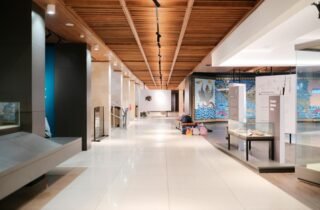
The heritage interpretation has improved too. Information boards explain the industrial history. The mill buildings carry their stories in their architecture – the loading bays, the iron frames, the canal-side positions that made logistics possible. You can walk through Ancoats and read two hundred years of history in the brickwork.
What Ancoats Tells Us About Manchester
Ancoats is Manchester in miniature. A place that built the modern world, was abandoned when the money moved on, and then reinvented itself for a new era. The tensions are real – between preservation and development, between community and investment, between history and commerce. But the alternative was continued dereliction, and nobody seriously argues that empty, crumbling mills served anyone better than what’s there now.
The honest assessment is that Ancoats’ regeneration has been mostly successful and partly unjust. The buildings have been saved. The neighbourhood is alive again. The food is excellent. But the people who live there now bear little resemblance to the people who made it, and the affordability crisis means that the creative types who made Ancoats interesting in its early regeneration phase are already being priced out. The cycle continues. Manchester keeps moving. Ancoats keeps changing. It always has.
Corrections
Spotted something wrong? Send a correction.