
If you drew a line from St Peter’s Square south to Fallowfield, you’d cover about two and a half miles. In that distance, you’d pass two major universities, three hospitals, a art gallery, an international cinema, a Victorian park, a concert hall, a dozen pubs, several theatres, and eventually hit the Curry Mile. No other street in Manchester packs this much into this little space. Oxford Road is not Manchester’s prettiest street or its most fashionable, but it is, by a considerable margin, its most interesting.
St Peter’s Square to the Refuge
The corridor starts properly at St Peter’s Square, where the tram lines converge and the Midland Hotel sits on the corner like an Edwardian ocean liner. The square itself has had a £10 million makeover – new paving, a memorial garden, and the cenotaph that has been the city’s gathering point for remembrance and protest for over a century. The Peterloo Massacre of 1819 happened here, or rather on the site of what’s now the Radisson hotel, and that fact should never be forgotten in any account of this street.
Cross onto Oxford Street (it becomes Oxford Road after a few hundred metres, don’t ask why) and the first major landmark is the Palace Theatre, a 1,955-seat Edwardian theatre that hosts the big touring musicals and shows. Across the road, the Refuge – once the Principal Manchester hotel, originally the Refuge Assurance building – is a spectacular Victorian Gothic pile that now houses a bar and restaurant in its tiled ground floor. The Refuge bar is one of the most beautiful rooms in Manchester: original tilework, high ceilings, a central bar that does excellent cocktails. On a Friday evening, it’s heaving.
The University Zone
South of the Mancunian Way – the elevated dual carriageway that splits the city centre from everything south of it – Oxford Road enters university territory. Manchester Metropolitan University’s campus is on the left, the University of Manchester’s on the right. Between them, they have over 70,000 students, making this one of the largest student populations in Europe.
The architecture tells a story of fifty years of university building. Manchester Met’s buildings range from brutalist towers to modern glass-and-steel additions. The University of Manchester has everything from the neo-Gothic Whitworth Hall to the gleaming National Graphene Institute and the Alan Turing Building. The quality is uneven – some buildings are genuinely impressive, others are the concrete boxes that British universities built in the 1960s and have been apologising for ever since.
The Precinct Centre, a 1970s shopping complex between the two universities, is an architectural curiosity – a brutalist raised walkway system that connected university buildings above street level. Parts of it have been demolished or repurposed, but the concept tells you something about the era’s ambitions for urban design.
What matters more than the architecture is the energy. During term time, Oxford Road is one of the most densely populated streets in Britain. Students on bikes, students on foot, students in campus bars, students in libraries. The foot traffic is relentless. This is a working street, not a strolling street, and the pace reflects it.
Contact Theatre and the Royal Northern College of Music
Contact Theatre, on the University of Manchester campus, is one of the most important young people’s theatres in Britain. The programming centres on new work by emerging artists, often from diverse backgrounds, with a particular strength in work that blurs the boundaries between theatre, music, and spoken word. If you want to see what Manchester’s next generation of artists is making, Contact is where to look.
A few hundred metres further south, the Royal Northern College of Music (RNCM) occupies a purpose-built complex on the corner of Oxford Road and Booth Street West. The concert hall seats 600 and hosts everything from student recitals to professional performances. The RNCM is one of the top conservatoires in the country, and its public events are some of the best value live music in Manchester. Student performances are often free or just a few pounds. The quality is frequently extraordinary – these are future professional musicians performing in a proper concert hall.
HOME
HOME, Manchester’s centre for international contemporary art, theatre, and film, opened in 2015 on the corner of Oxford Road and Whitworth Street West. The building, designed by Mecanoo, is a sharp-angled glass structure that looks like nothing else on the street. Inside, there are two theatres, five cinema screens, a gallery space, a bookshop, and a bar-restaurant.
The cinema programming is exceptional. HOME screens independent, international, and arthouse films that you won’t find at the Odeon or Vue. The theatre programme is similarly ambitious – new writing, international touring work, and experimental performance. The gallery shows contemporary visual art with a focus on film and photography.
HOME is the kind of venue that makes a street. It draws a different crowd to Oxford Road – the people who come for a 4pm screening of a Romanian film, or an evening of experimental theatre, or a Saturday afternoon in the gallery followed by a glass of wine in the bar. It’s civilising in the best sense, and it changed the Oxford Road corridor when it opened.
The Whitworth and Whitworth Park
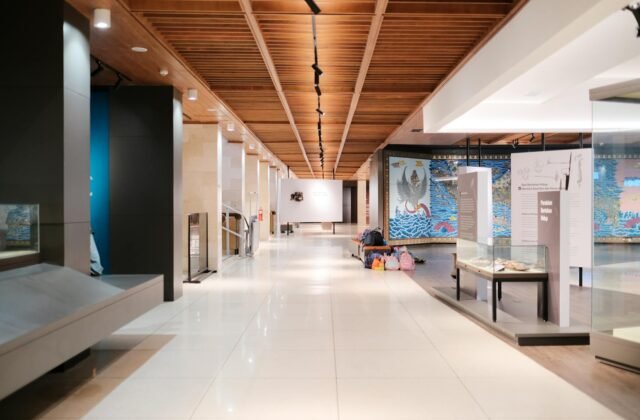
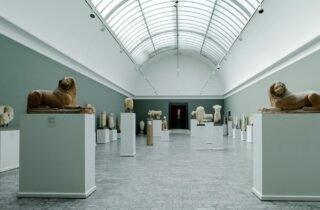
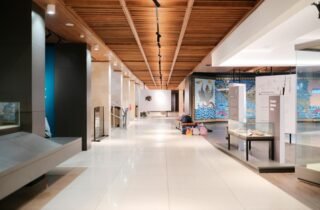
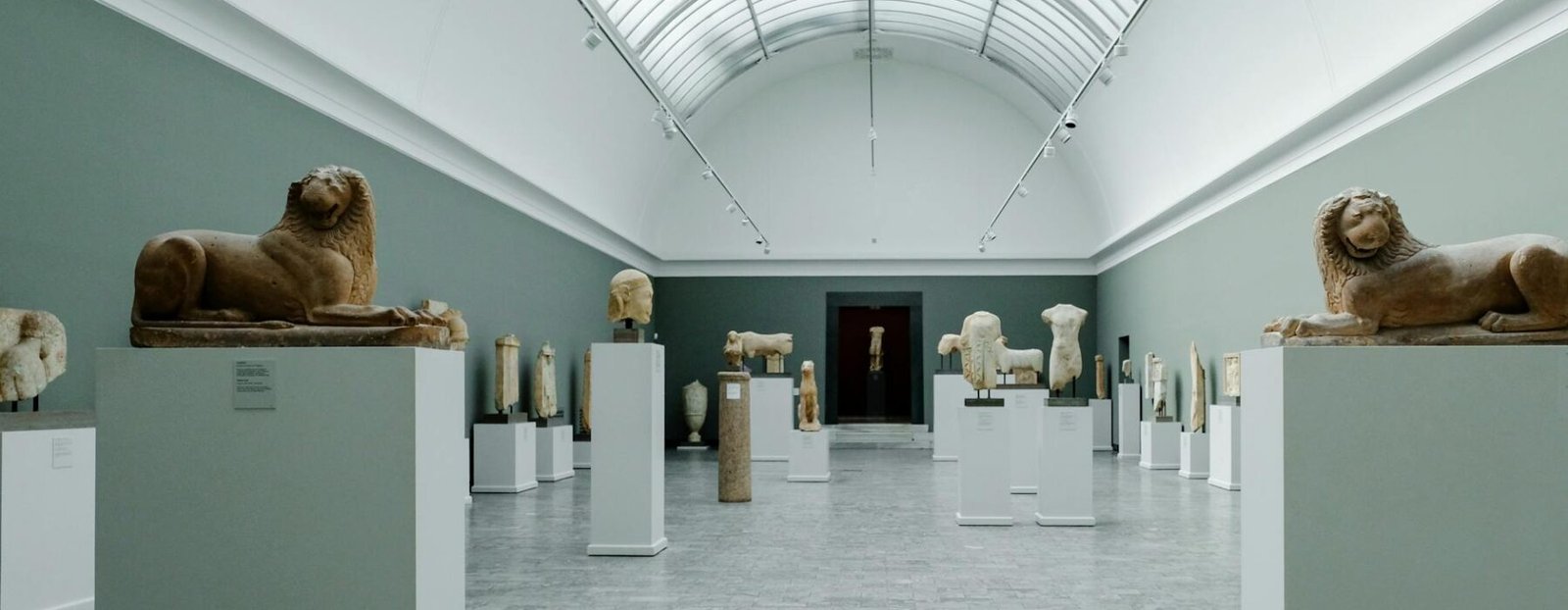
The Whitworth gallery sits at the southern end of the university campus, backing onto Whitworth Park. It’s a University of Manchester gallery with a collection that ranges from textiles (the historical strength) to contemporary art, wallpapers, prints, and drawings. The 2015 extension by MUMA architects added a dramatic glass promenade that blurs the boundary between gallery and park – you look at art on one side and trees on the other.
The Whitworth is free. This matters. A gallery with no admission charge, open to everyone, sitting between a university and a public park. The café in the glass extension is one of the nicest places to sit in south Manchester, particularly when the afternoon light comes through the trees.
Whitworth Park itself is a proper Victorian park – paths, trees, a memorial arch, and the kind of gentle green space that south Manchester needs amid all the brick and tarmac. On summer weekends, it fills with students, families, and picnickers. The park connects visually and physically to the gallery, creating a cultural quarter that feels generous and open.
The Hospitals
Oxford Road is also one of the largest hospital corridors in Europe. The Manchester Royal Infirmary, St Mary’s Hospital, and the Royal Manchester Children’s Hospital all sit along or just off the road. The MRI has been on this site since 1752, making it one of the oldest teaching hospitals in the country.
The hospital presence shapes Oxford Road in ways that aren’t always visible. The foot traffic includes medical staff in scrubs, patients, ambulances, and the delivery vehicles that keep a major hospital complex running. The sandwich shops and cafés along this stretch serve a mixed crowd of students and NHS workers. The hospitals also mean Oxford Road is busy around the clock – shift changes at 7am and 7pm create their own rush hours.
The Pubs and Bars
Oxford Road has a pub heritage that goes back centuries, though the current crop is largely student-oriented. The Thirsty Scholar, directly beneath the railway bridge at Oxford Road station, is a small, dark bar with live music and cheap drinks. Sandbar, on Grosvenor Street just off Oxford Road, has been a student hangout for decades – mismatched furniture, a pool table, and a jukebox that actually gets used. The Footage, closer to the university campus, does the cheap-pint-and-a-burger trade that students need.
For something less studenty, the Deaf Institute on Grosvenor Street has a bar downstairs and a gig room upstairs, with a personality that transcends its campus-adjacent location. And the Refuge bar, up at the northern end, is a proper grown-up bar in a magnificent room.
South: Towards Rusholme and Fallowfield
As Oxford Road pushes further south, it passes through the residential streets of Rusholme before hitting Wilmslow Road and the Curry Mile. The transition is gradual – the institutional buildings of the university zone give way to terraced houses, corner shops, and the small businesses that serve a residential population.
Fallowfield, at the southern end, is student-land – halls of residence, shared houses, and the pubs and takeaways that sustain them. It’s not pretty, but it’s alive, and on a Friday night the number 142 bus from Piccadilly to Fallowfield is an anthropological experience in itself.
Why Oxford Road Matters
Oxford Road is not a showpiece street. It doesn’t have the Victorian grandeur of King Street or the regeneration polish of Spinningfields. The traffic is heavy, the road surface is perpetually being dug up, and the bus lane enforcement catches someone out every thirty seconds.
But no other street in Manchester concentrates so much of the city’s intellectual, cultural, and social life into one corridor. Two universities producing the next generation of graduates. Hospitals saving lives around the clock. Galleries and theatres that can compete with anything in London. Pubs that have been serving the same streets for generations. And at the far end, the Curry Mile, feeding the city for fifty years.
Oxford Road is Manchester at its most functional and its most vital. The street is not trying to impress anyone. It’s too busy for that. It has work to do – teaching, healing, feeding, entertaining, and moving 70,000 students from A to B every day. That’s about as Manchester as a street can get.
Corrections
Spotted something wrong? Send a correction.