
The word Cottonopolis was coined in the 19th century to describe what Manchester had become. By the 1850s, the city and its surrounding mill towns produced more cotton cloth than any other place on earth. The infrastructure of modern industrial production was prototyped here. Mass-produced clothing as a global commodity began here. Two centuries later, the world still buys what Cottonopolis figured out how to make.
How It Started
Manchester wasn’t naturally a textile city. Until the 1750s, it was a moderate-sized market town in Lancashire with limited industrial significance. What changed everything was the combination of three things in the second half of the 18th century: technical innovation in spinning machinery (the spinning jenny, the water frame, the spinning mule), abundant water power from the Pennine streams, and access to imported raw cotton via the port of Liverpool down the road.
By 1780, the first cotton mills had appeared in Manchester. By 1800, the city had over 50 mills. By 1830, over 100. By 1850, Manchester had 108 mills inside its city boundaries and the wider Lancashire region had hundreds more. The combined output dressed a significant portion of the global market for affordable clothing.
The Mill District (Ancoats)
Ancoats was the world’s first industrial suburb. The street pattern was laid out specifically to accommodate large multi-storey mill buildings, the workers housing for the mill workforce, the canals that moved raw materials in and finished cloth out, and the supporting industries (machine workshops, dye works, finishing works).
Murray’s Mills, opened in 1798 by brothers Adam and George Murray, was at the time the largest single industrial building in the world. McConnel and Kennedy’s mill across the street was similar scale. Together they formed the world’s first industrial mill complex and the prototype for industrial production globally.
The buildings still stand. Murray’s Mills was redeveloped into apartments in the 2010s. Several other Ancoats mills survive as restaurants, residential, creative space. The brick architecture you see in Ancoats today is the architecture of the world’s first fashion industrial complex.
The Workforce
The mills employed enormous workforces. By the 1850s, hundreds of thousands of mill workers across Manchester and Lancashire produced cotton cloth on shifts that ran 12-16 hours, six days a week, in conditions documented as some of the worst industrial labour conditions in history.
The workforce was disproportionately women and children. Women operated the spinning machines. Children worked as scavengers (cleaning under the moving machines), piecers (joining broken threads) and in roles requiring small bodies and quick hands. The Factory Act 1833 limited (but did not eliminate) child labour. Working conditions improved gradually through the 19th century but remained brutal by modern standards into the early 20th century.
The workers built the labour movement. Manchester is where the Trades Union Congress was founded (1868). The Manchester labour movement was the political response to Cottonopolis conditions. The Manchester Working Class Movement Library in Salford holds extensive archive material on this period.
The Global Supply Chain
Cottonopolis ran on global trade. Raw cotton came primarily from the American South (slave-grown cotton until the US Civil War, then sharecropping cotton afterward) and from the Indian subcontinent (where British colonial policy systematically destroyed local Indian textile manufacturing to ensure raw cotton flowed to Manchester instead).
The American Civil War (1861-1865) caused the Cotton Famine in Manchester when Union blockades cut off cotton supplies. Mill workers faced mass unemployment. The crisis is remembered today as one of the defining moments of Manchester labour solidarity. The mill workers of Manchester famously sent letters of support to Abraham Lincoln endorsing his anti-slavery position despite the immediate impact on their own livelihoods.
Finished cloth flowed from Manchester to global markets. India became one of the largest single markets for Manchester cloth (a tragic irony given that Indian textile manufacturing had been destroyed to enable this). Africa, the Americas, the British colonies, continental Europe all bought Manchester cloth in vast quantities.
The Logistics Infrastructure
Cottonopolis required modern logistics to function. The Bridgewater Canal, opened in 1761, was the world’s first modern industrial canal, designed specifically to move coal from Worsley to Manchester to fuel the mills. The Manchester-Liverpool Railway, opened 1830, was the world’s first inter-city passenger railway and the prototype for global railway development. The Manchester Ship Canal, opened 1894, made Manchester an inland port able to receive ocean-going cotton ships directly.
The whole infrastructure of modern logistics was prototyped to serve Cottonopolis. Modern container shipping, modern just-in-time supply chains, modern global trade all trace philosophical lineage back to what Manchester needed to keep its mills running.
The Royal Exchange
The Royal Exchange in St Ann’s Square was where Manchester traded the cotton. At its peak, the Exchange floor traded more cotton than any other commodity exchange in the world. Cotton merchants, mill owners, brokers met daily on the floor to trade contracts. The building still stands and now houses the Royal Exchange Theatre, but the trading floor architecture is preserved and you can see where Cottonopolis was financially organised.
The Decline
Cottonopolis peaked in the 1870s. From the 1880s onwards, the cotton industry declined gradually. International competition (Japanese, then Indian, then Chinese cotton manufacturing) eroded Manchester’s dominance. Tariff barriers hurt exports. World War One and World War Two damaged the industry further.
By the 1950s and 60s, the Manchester cotton industry had collapsed substantially. Mill closures became regular events. The mill buildings stood empty for decades. The wider region (Bury, Bolton, Rochdale, Oldham, the Pennine mill towns) experienced economic devastation as the cotton industry that had defined them for 150 years disappeared.
Some manufacturing survived. Technical textiles (continued production for industrial uses), specialist cloth (some Premier League football kit cloth is still woven in Lancashire), high-end specialist outerwear. But the volume cotton manufacturing that defined Cottonopolis effectively ended.
What Cottonopolis Left Behind
The architecture
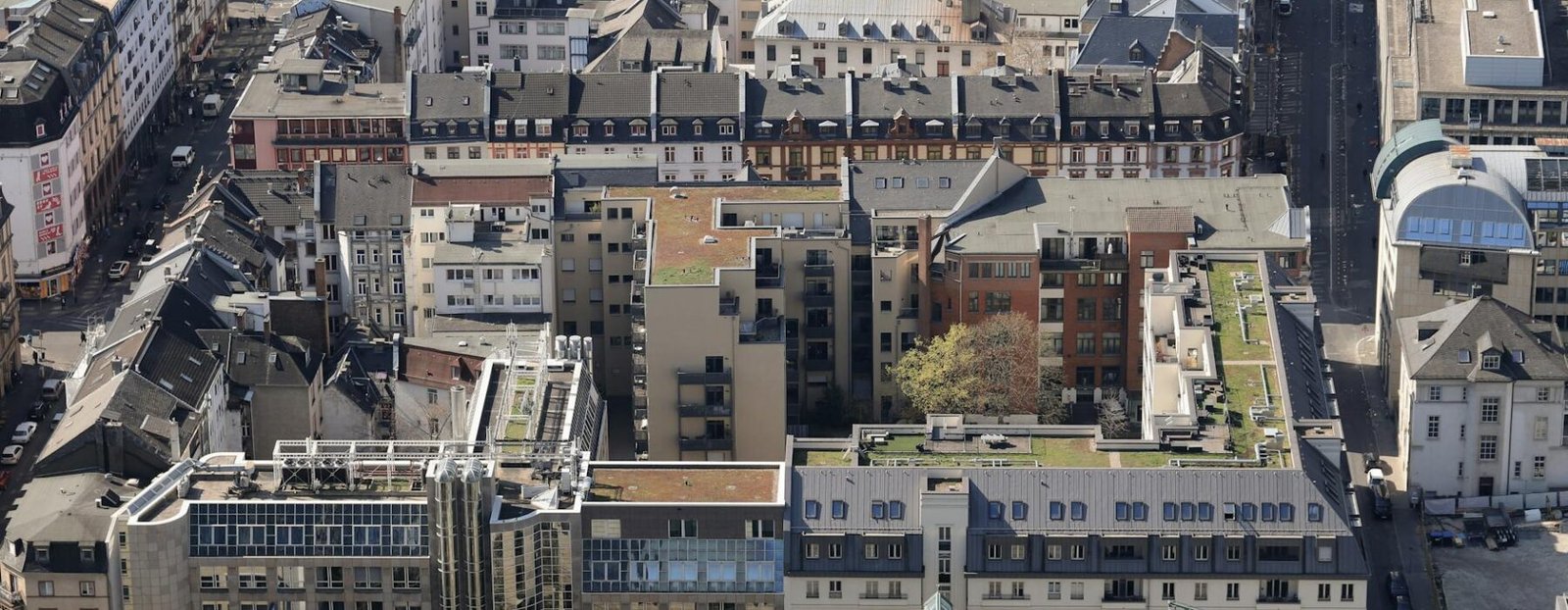
Manchester’s industrial heritage architecture (Ancoats mills, Castlefield warehouses, the Royal Exchange, the Town Hall built on cotton wealth) defines large parts of the city today. Most of the surviving mill buildings have been redeveloped into apartments, restaurants, creative space or hotels.
The economic foundations
Manchester’s wider economy was built on cotton wealth. The banking sector (Co-op Bank, formerly the Co-operative Wholesale Society Bank, founded to support the Lancashire cooperative movement). The insurance sector. The retail sector (Lewis’s, Kendals, Affleck and Brown department stores). The transport infrastructure. All built on cotton.
The fashion economy DNA
Manchester’s modern fashion economy carries the DNA of Cottonopolis. Boohoo Group’s volume manufacturing approach, the regional supply chain expertise, the ability to scale clothing production rapidly – all owe debt to the manufacturing capability built up over 150 years of cotton dominance.
The labour heritage
The Manchester labour movement, the trade unions, the cooperative movement, the workers’ rights advocacy that emerged from the mills shaped British politics for generations and continue to influence Manchester’s political identity.
The architecture of ambition
Manchester Town Hall, the Free Trade Hall, the John Rylands Library, the Manchester Cathedral – the civic buildings of Manchester were built largely on cotton wealth and reflect the ambition of a city that for a century dressed the world.
Visiting Cottonopolis Today
Murray’s Mills, Ancoats
The original mill building survives as residential. Walk Bengal Street to see it from outside. The wider Ancoats mill complex including the surrounding workers housing gives a sense of what the world’s first industrial suburb looked like.
The Castlefield basin and warehouses
Where the Bridgewater Canal terminated. The warehouses are now restaurants, bars, apartments. The infrastructure of cotton logistics is visible.
The Science and Industry Museum, Castlefield
Permanent exhibitions on Cottonopolis with operating mill machinery, social history of the mill workers, the global trade context.
The People’s History Museum
Strong on the labour movement that emerged from Cottonopolis conditions.
The Manchester Working Class Movement Library, Salford
Archive of mill worker history, labour movement, working class culture.
Quarry Bank Mill, Styal (15 minutes south)
National Trust property. A preserved working cotton mill from the early 19th century. Operating water-powered machinery. The closest experience to what Cottonopolis production actually felt like.
Manchester Cathedral
The medieval church that became the cathedral when Manchester was elevated to city status partly on the strength of the cotton economy.
Manchester Town Hall
Built 1877 on cotton wealth at the peak of Cottonopolis. The most ambitious civic building of its era. Reopened 2024 after refurbishment.
Why It Still Matters
Three reasons. First, the modern fashion industry is recognisably descended from Cottonopolis. Mass production, global supply chains, brand-driven volume manufacturing, even the idea of seasonal collections – all trace back to systems Cottonopolis prototyped. Second, the labour ethics questions that Cottonopolis raised (working conditions, child labour, environmental impact, global supply chain ethics) are exactly the questions modern fast fashion grapples with today. Third, the physical legacy is the city itself. Walk Manchester and you walk through the architecture of the world’s first fashion industrial complex.
Boohoo Group’s headquarters is a few miles from where Murray’s Mills stood. The lineage isn’t accidental.
Corrections
Spotted something wrong? Send a correction.