
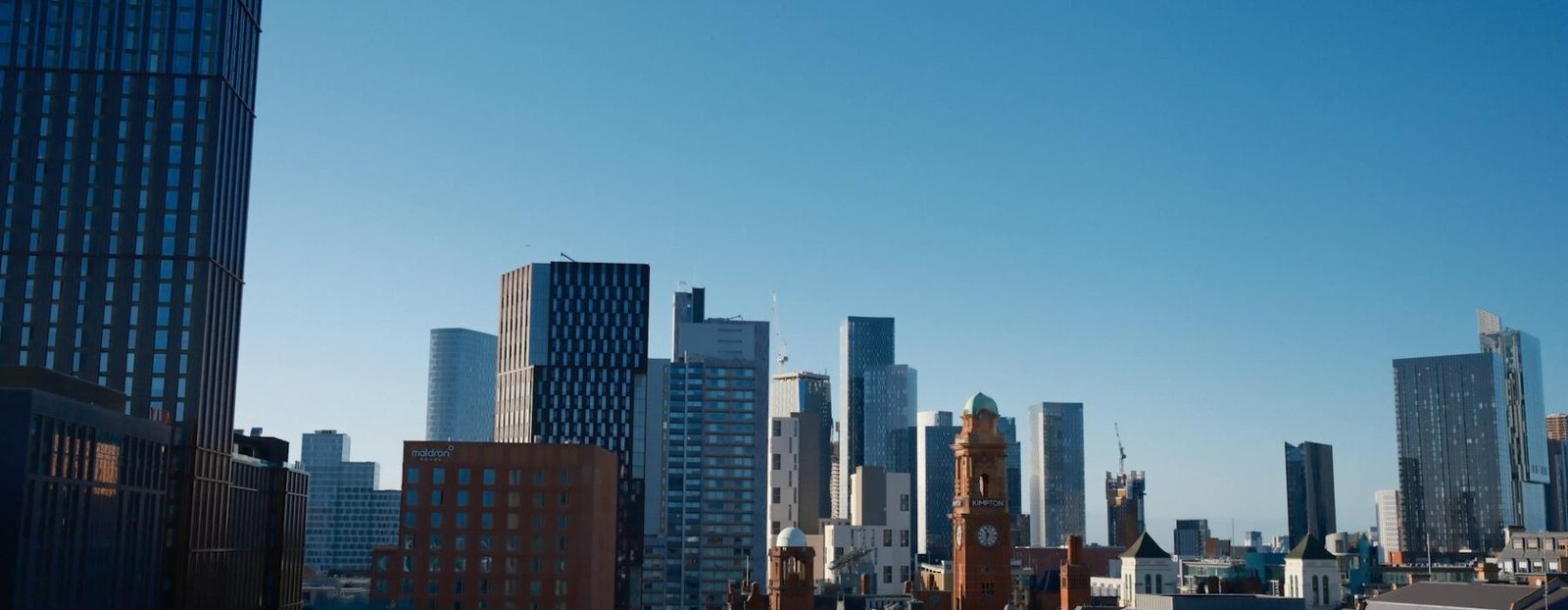
Manchester has made genuine progress on accessibility in recent years. The Metrolink is fully step-free, most new-build venues are accessible, and the city centre is largely flat. But it’s not perfect. Cobbled streets, old buildings with steps, and inconsistent standards mean you still need to plan ahead. This guide is honest about what works and where the city falls short.
Getting Around – Transport
Metrolink (Trams)
All Metrolink trams are step-free with level boarding from the platform. Every stop has a raised platform for wheelchair access. There are designated wheelchair spaces on every tram. This is the most accessible public transport option in Manchester by a clear margin. The tram network covers most of the city – from the airport to the city centre, Bury, Rochdale, Ashton, Eccles, and Didsbury.
Buses
All Stagecoach and Go North West buses in Manchester are low-floor with ramps. Drivers are required to lower the ramp if you need it. In practice, most drivers are helpful. The wheelchair space is shared with pushchairs, which can cause conflicts during busy periods – legally, wheelchair users have priority. If you have issues, TfGM’s complaints line is 0161 244 1000.
Trains
Manchester Piccadilly has step-free access to all platforms via lifts. Staff can provide a ramp for boarding. Book assistance through National Rail Accessibility at least 6 hours ahead (ideally 24 hours) via the Passenger Assist app or by calling 0800 022 3720. Manchester Victoria has step-free access but it’s more limited – some platforms require staff assistance. Manchester Oxford Road is the worst of the three for access – the lifts are unreliable. Check before you travel.
Taxis
Manchester’s Hackney cabs (black cabs) are wheelchair accessible – they have ramps and tie-down points. All licensed Hackney carriages must be wheelchair accessible by law. Private hire vehicles are mixed. If you need a wheelchair accessible private hire vehicle, specify this when booking. Street Cars and Arrow Cars have accessible vehicles in their fleets but you must request one in advance.
Uber/Bolt
Uber has a WAV (wheelchair accessible vehicle) option in the app. Availability varies – there are fewer WAVs in the fleet, so wait times can be longer. Bolt does not currently have a dedicated accessible vehicle option in Manchester.
City Centre Accessibility
Manchester city centre is largely flat, which helps. The main shopping streets – Market Street, Deansgate, St Ann’s Square – are paved and step-free. But watch for:
- Cobbles: Shudehill, parts of the Northern Quarter (Thomas Street, Oldham Street), and Cathedral Yard are cobbled. Difficult for wheelchairs and uncomfortable for anyone with mobility issues.
- Dropped kerbs: Most crossings have them. Some side streets in the NQ and Ancoats don’t. Inconsistent.
- Construction: Manchester has permanent construction works somewhere at all times. Temporary pavements are often narrow and uneven. Check your route in advance if you’re unfamiliar with the area.
Accessible Restaurants and Cafes
Most newer restaurants in Manchester are step-free at ground level. The problems are usually in older buildings, basements, and upper floors. Call ahead if you’re unsure – most places are happy to confirm access.
Reliably Accessible
- Mackie Mayor – Swan Street, NQ. Ground floor food hall, wide aisles, accessible toilets. One of the best accessible eating spots in the city centre.
- Dishoom – 32 Bridge Street, M3. Step-free entrance, accessible toilet, spacious layout.
- Bundobust – 61 Piccadilly, M1. Ground floor, step-free, accessible toilet.
- Hawksmoor – 184 Deansgate, M3. Ground floor dining, step-free access, accessible facilities.
- The Refuge – Oxford Street, M60. Large ground floor space, step-free, accessible toilets. The building is grand and spacious.
- Home (arts centre) – Tony Wilson Place, M15. Purpose-built, fully accessible. Cinema, theatre, restaurant, and bar all step-free with wheelchair spaces. Accessible toilets and a Changing Places facility.
- Arndale Food Court – Step-free via lifts, wide spaces, accessible toilets on site.
Places to Check First
- Northern Quarter basements: Several popular NQ bars and restaurants are in basements with stairs and no lift. Always check before booking. Common Ground, the downstairs section of some Stevenson Square venues, and several Tib Street spots have steps.
- Deansgate Locks: The canal-side bars are generally step-free from the towpath level, but getting down to towpath level can involve steps depending on which direction you approach from.
- Castlefield: The canal basin area is largely flat once you’re there, but some approaches involve steps or cobbles.
Blue Badge Parking
Blue Badge holders can park free on single or double yellow lines for up to 3 hours (as long as no loading restrictions apply). In Manchester city centre, there are also designated Blue Badge bays on several streets including:
- Portland Street
- Princess Street
- Whitworth Street
- Mosley Street
- Several bays around Piccadilly Gardens
NCP and Q-Park car parks have designated accessible bays – these are wider and closer to lifts. Blue Badge holders get discounted or free parking at some NCP locations. Check the individual car park’s policy.
The Manchester City Council website has a map of all Blue Badge parking bays in the city centre. It’s worth checking before you visit.
Accessible Hotels
- Kimpton Clocktower Hotel – Oxford Street. Adapted rooms, step-free access throughout, central location.
- Holiday Inn Manchester City Centre – Medlock Street. Wheelchair accessible rooms, roll-in showers, ground floor access.
- Premier Inn (multiple locations) – All Premier Inns have accessible rooms with adapted bathrooms. The Portland Street and Piccadilly locations are the most central.
- Hilton Deansgate – Cloud 23 bar has lift access. Accessible rooms available. Central.
- Travelodge Manchester Central – Blackfriars Street. Accessible rooms, step-free, budget option.
Always book accessible rooms directly with the hotel rather than through third-party booking sites – you can confirm the specific adaptations you need.
Accessible Attractions
- Manchester Museum – Oxford Road. Recently refurbished and fully accessible. Lifts to all floors, wheelchair loan available, accessible toilets.
- Science and Industry Museum – Liverpool Road, Castlefield. Mostly accessible. Some historic buildings have limitations – check their access guide online before visiting. Wheelchair loan available.
- Imperial War Museum North – The Quays, Trafford Wharf Road. Purpose-built, fully accessible.
- The Lowry – Salford Quays. Fully accessible theatre and gallery. Wheelchair spaces in all auditoriums. Audio described and signed performances available.
- Manchester Art Gallery – Mosley Street, M2. Lift access to all floors. Some gallery doorways are narrow in the older sections.
- National Football Museum – Cathedral Gardens, M4. Fully accessible, lift to all floors.
Changing Places Toilets
Standard accessible toilets aren’t enough for everyone. Changing Places facilities have a height-adjustable changing bench, a hoist, and more space. Manchester has several:
- Home (Tony Wilson Place)
- Manchester Arndale
- Manchester Airport (all terminals)
- The Lowry, Salford Quays
- Manchester Piccadilly station
- National Football Museum
The Changing Places website (changing-places.org) has a full map.
Useful Resources
AccessAble (formerly DisabledGo) – accessable.co.uk has detailed access guides for hundreds of Manchester venues, including photos of entrances, toilets, and parking. Genuinely useful for planning.
TfGM Accessibility – tfgm.com/accessibility has information about accessible transport across Greater Manchester.
Manchester City Council – 0161 234 5000 for general access enquiries.
Where Manchester Falls Short
Honesty matters here. The Northern Quarter’s cobbled streets and stepped entrances are a real barrier. Many independent restaurants and bars are in converted Victorian buildings that weren’t designed for wheelchair access. Some have no accessible toilet even if the ground floor is step-free. The side streets off Deansgate and the NQ need significant kerb and surface improvements. Public toilet provision for disabled people is poor outside of shopping centres and major venues. And while the Metrolink is excellent, the bus experience depends heavily on the individual driver and whether the wheelchair space is already occupied.
Manchester is getting better. The newer developments in Ancoats, NOMA, and Circle Square are built to modern accessibility standards. But the city has work to do on its older areas. Planning ahead, calling venues to confirm, and using AccessAble guides will save you frustration.
Corrections
Spotted something wrong? Send a correction.