
The Midland Hotel sits on Peter Street like it owns the place. It does, in a sense. For 123 years, the terracotta-clad building has been the most important hotel in Manchester – the place where deals were struck, reputations were made, and the city presented its most polished face to the world. Other cities have grand hotels. Manchester has the Midland, and the Midland has Manchester running through it like lettering through a stick of rock.
Walk through the revolving doors on a Tuesday afternoon and the lobby hits you with that specific grand-hotel atmosphere: marble floors, high ceilings, the scent of expensive candles, and the quiet efficiency of staff who’ve been trained to make you feel important without making you feel watched. It’s a building that rewards attention. The details are everywhere if you know where to look, and behind each detail there’s usually a story.
Opening Night, 1903
The Midland opened on 6 September 1903, built by the Midland Railway company as the northern terminus hotel for their rail network. The logic was simple: if you were taking the train from London to Manchester, you needed somewhere to stay at the other end, and the railway company might as well be the one collecting your hotel bill. The architect was Charles Trubshaw, who designed several other Midland Railway hotels, but the Manchester Midland was his grandest commission.
The cost was £1 million – a vast sum in 1903. The building was faced in Burmantofts terracotta, the warm brown-orange cladding that gives the Midland its distinctive colour and texture. Inside, Trubshaw specified marble, mahogany, stained glass, and decorative tilework at a standard that competed with the finest hotels in London. The message was clear: Manchester was not a provincial city that needed London’s approval. It was a commercial capital that could build its own grand institutions.
The hotel had 400 bedrooms, a winter garden, a Turkish bath, and what was then one of the finest restaurants in the north of England. The guest list from opening week reads like a directory of Edwardian Manchester’s industrial elite: cotton merchants, shipping magnates, and railway directors who were simultaneously the hotel’s owners and its most loyal customers.
Rolls Meets Royce
The Midland’s most famous historical footnote happened in 1904, less than a year after the hotel opened. Charles Rolls, an aristocratic motor car enthusiast and dealer, was in Manchester for a meeting. Henry Royce, an electrical engineer from Hulme who had been building experimental motor cars in his workshop on Cooke Street, wanted to meet him. The introduction was arranged by a mutual acquaintance, Henry Edmunds, and the meeting took place at the Midland Hotel.
What exactly was said over lunch is lost to history, but the outcome was decisive. Rolls agreed to sell the cars that Royce built. The partnership was formalised later that year, and Rolls-Royce Limited was incorporated in 1906. One of the most iconic British brands in history was conceived over a table at the Midland. The hotel has a plaque commemorating the meeting, and the story is part of both Manchester’s and the Midland’s founding mythology.
It’s worth pausing on what this meeting represents about Edwardian Manchester. The city was a place where an engineer from Hulme could meet an aristocrat from London and create something world-changing, facilitated by a hotel that existed precisely to enable these kinds of encounters. The Midland wasn’t just accommodation. It was infrastructure for ambition.
The Architecture
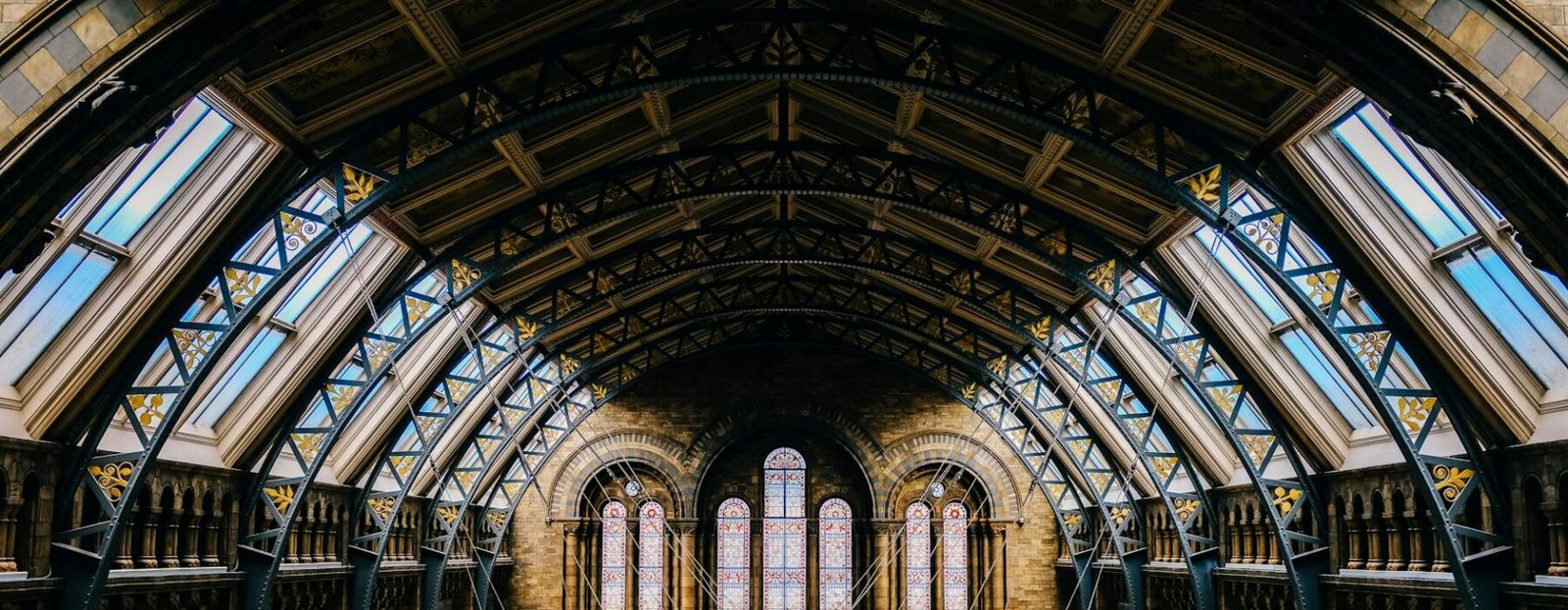
Trubshaw’s design is Edwardian Baroque at its most confident. The exterior is symmetrical and imposing, the terracotta facades decorated with carved details that most pedestrians walk past without noticing: swags, cartouches, and keystones that reward anyone who stops and looks up. The corner towers give the building a presence on Peter Street that dominates the surrounding architecture.
Inside, the public spaces have been refurbished multiple times but retain the bones of Trubshaw’s original design. The lobby’s marble columns and floor are original. The grand staircase, with its wrought-iron balustrades and stained-glass window, is one of the finest pieces of hotel architecture in the north of England. The octagonal tea room (now part of the ground-floor bar area) has a domed ceiling with decorative plasterwork that could hold its own against any London hotel of the same era.
The tilework deserves specific mention. Throughout the public areas and corridors, the original Edwardian tiles survive in patterns and colours that reflect the Arts and Crafts influence of the period. Greens, blues, and creams in geometric patterns that are as fresh now as they were in 1903. These tiles are the kind of detail that renovation budgets often sacrifice. The Midland has, to its credit, preserved them through every refit.
A Century of Guests
The guest book of the Midland Hotel, if it were compiled in full, would read as a parallel history of the twentieth century. The hotel became the default Manchester stop for any visiting dignitary, performer, or politician from the moment it opened.
Every British prime minister since Winston Churchill has stayed at the Midland. Churchill himself was a regular, using the hotel as his Manchester base during political visits. The hotel’s proximity to the Free Trade Hall on Peter Street – Manchester’s primary venue for political rallies and public meetings – made it the obvious choice for politicians. Margaret Thatcher stayed here during Conservative Party conferences. Tony Blair used the hotel as a base during Labour’s northern campaigns.
The Beatles stayed at the Midland during their Manchester performances in the 1960s. The Rolling Stones, the Who, and virtually every major touring act of the rock and roll era passed through. The hotel’s ability to handle famous guests discreetly – a private entrance, rooms away from public corridors, staff trained not to gawp – made it the only serious option for decades.
Bob Dylan’s 1966 visit to Manchester is inextricably linked to the Midland. After the infamous Free Trade Hall concert – where an audience member shouted an insult at Dylan for going electric, and Dylan responded by telling the band to play louder – the entourage returned to the Midland. The hotel was the backdrop to one of the most mythologised moments in rock history.
Decline and Revival
Like many grand hotels, the Midland went through difficult decades. The post-war period saw declining standards, deferred maintenance, and a gradual loss of the luxury positioning that had defined the hotel since 1903. By the 1980s and 1990s, the Midland was still grand in scale but tired in execution. The rooms needed updating, the public areas needed investment, and the hotel’s reputation had slipped from essential to merely traditional.
The IRA bombing of Manchester city centre in 1996, while it didn’t directly damage the Midland, devastated the surrounding retail area and disrupted the hotel’s business. The subsequent rebuilding of the city centre – which ultimately made Manchester a better, more modern city – also raised expectations for what a premium hotel should offer.
The Midland’s most significant modern renovation came under QHotels and then the Edwardian Hotels group, which invested heavily in restoring the public spaces and upgrading the rooms to contemporary luxury standards. The spa was expanded. The restaurants were relaunched. The rooms were brought up to the standard that modern travellers expect: good beds, proper showers, Wi-Fi that actually works.
Mr Cooper’s House and Garden
The hotel’s current flagship restaurant is Mr Cooper’s House and Garden, which occupies the former French Restaurant space on the ground floor. The French had been the Midland’s fine dining room since the hotel opened – a formal, white-tablecloth establishment that served classical French cuisine to Manchester’s business elite for decades. Mr Cooper’s replaced it with something more relaxed: a brasserie-style menu with British and European influences, served in a room that retains the original proportions and decorative details but has been redecorated with a more contemporary sensibility.
The name references a fictitious former resident – a piece of storytelling that some find and others find unnecessary. The food is solid: well-sourced ingredients, capable cooking, and a menu that plays to the room rather than trying to compete with the city’s more innovative restaurants. It’s a hotel restaurant, with all the strengths and limitations that implies. What makes it worth visiting is the room itself: the height of the ceiling, the quality of the light, the sense of dining in a space that has hosted meals for over a century.
The Spa
The Midland’s spa occupies the lower ground floor – the area where the original Turkish baths were located in 1903. The current spa has a swimming pool, treatment rooms, a thermal suite, and a gym. It’s well-maintained and popular with both hotel guests and day visitors. The pool area, with its tiled walls and low lighting, has an atmosphere that nods to the building’s Edwardian origins without trying to replicate them.
As city-centre spas go, it’s one of the better ones in Manchester. The treatment list covers the usual territory: massages, facials, body treatments. The thermal suite – steam room, sauna, experience showers – is the real draw for day visitors. It’s a world away from Peter Street, which is exactly the point.
What It Feels Like Now
The Midland in 2026 occupies an interesting position. It’s no longer the only luxury hotel in Manchester – the Stock Exchange Hotel, the Edwardian on Peter Street (now the Kimpton Clocktower), and the King Street Townhouse all compete for the high-end market. But none of them have 123 years of history. None of them have the Rolls-Royce story, the Beatles connection, or the architectural gravitas of Trubshaw’s original design.
The rooms are comfortable without being cutting-edge. The service is professional without being stuffy. The public spaces – the lobby, the staircase, the corridors with their original tiles – are what distinguish the Midland from every other hotel in the city. Walking from the lobby to the lift, you pass through layers of Manchester history that no amount of investment in a new-build hotel can replicate.
The Midland is not a museum and it’s not trying to be one. It’s a working hotel that happens to be one of the most historically significant buildings in Manchester. Stay here and you’re sleeping in the same building where Rolls-Royce was conceived, where prime ministers planned speeches, and where Bob Dylan retreated after being heckled for going electric. That’s not a marketing line. It’s 123 years of accumulated fact, embedded in the marble and the tiles and the grand staircase that takes you up to your room.
Corrections
Spotted something wrong? Send a correction.