
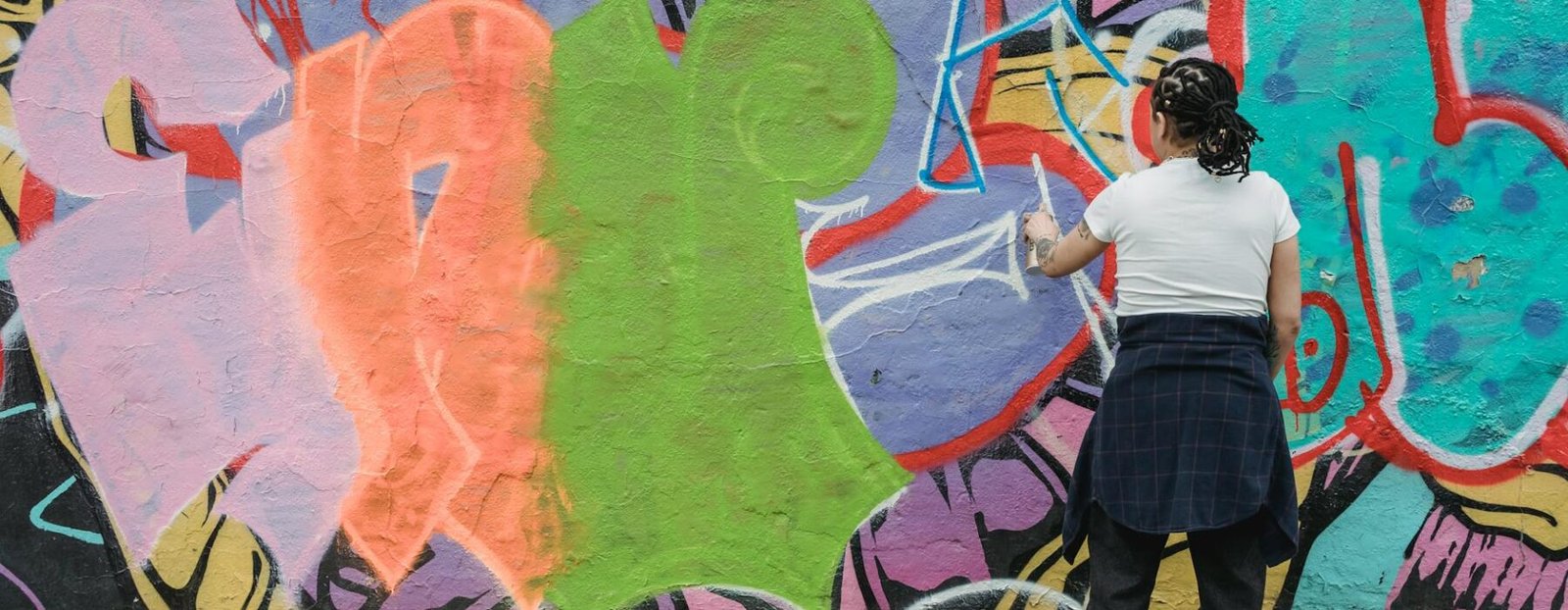
Manchester’s street art scene didn’t happen by accident and it didn’t happen overnight. It grew out of the Northern Quarter’s long history of looking the other way when someone got a spray can out, and it’s now one of the most concentrated collections of outdoor murals in the UK. Some of it is commissioned. Some of it is guerrilla. All of it is free to see, which makes it one of the best things to do in this city on any budget.
The Northern Quarter – Where Most of It Lives
The NQ is ground zero for Manchester street art. Almost every available wall surface between Piccadilly Gardens and Great Ancoats Street has been painted at some point, and the turnover is constant – what’s there today might be painted over next month. That’s part of the appeal. It’s a living gallery, not a museum.
Stevenson Square is the easiest starting point. The square itself has several large-scale murals on its surrounding buildings, and it’s become an unofficial outdoor gallery. The pieces here tend to be the most polished – these are the walls that get formally commissioned and attract the more established artists. Stand in the middle of the square and turn 360 degrees. You’ll count at least half a dozen major pieces.
Tib Street running north from the square is another concentration point. The walls along here change regularly, and you’ll find everything from massive photorealistic portraits to abstract pieces to sharp political commentary. The side streets and alleyways off Tib Street often have smaller, less visible work that rewards a slow wander with your head on a swivel.
Dale Street and Hilton Street between them form a corridor of street art that’s easy to walk in fifteen minutes. Dale Street in particular has some of the NQ’s largest wall pieces. Some of the buildings here are scheduled for redevelopment, which means the murals have an expiry date – see them while you can.
Akse P19 – Manchester’s Most Recognisable Street Artist
If you’ve seen a photorealistic portrait on a Manchester wall, there’s a decent chance it was painted by Akse P19. The French-born, Manchester-based artist has become synonymous with the city’s street art scene, and his work is scattered across the Northern Quarter and beyond.
His Ian Curtis portrait on Port Street is one of the most photographed pieces of street art in Manchester. Curtis stares out from the wall with that intense, hollow-eyed look, and it’s become something of a pilgrimage site for Joy Division fans. It was painted in 2020 and has survived untouched – there’s an unwritten rule in the NQ about not painting over certain pieces, and this is one of them.
Akse’s worker bee mural appeared in the aftermath of the Manchester Arena attack in 2017. The bee – Manchester’s symbol since the Industrial Revolution – became the city’s emblem of defiance and solidarity overnight. Akse’s version on the side of a building off Thomas Street is one of the most prominent of the hundreds that appeared across the city. It’s still there, still resonant, still making people stop.
He’s also done portraits of Tony Wilson, Emmeline Pankhurst, and Marcus Rashford, among others. The quality of the painting is remarkable – from a distance, some of his pieces look like photographs projected onto brick. Up close, you can see the brushwork and the spray technique, which makes them even more impressive.
Outhouse MCR
Outhouse MCR is a community street art project that provides legal walls for artists to paint. Started in 2015, it’s turned several previously blank or neglected walls into rotating galleries. The key Outhouse sites include walls on Tib Street, Spear Street, and several locations in Ancoats.
What Outhouse does well is bridge the gap between graffiti and gallery art. The walls are legal, so artists can take their time – you get work that’s more considered and more ambitious than what you’d see on a quick illegal piece. But the ethos is still street art, not public art. There’s no committee approval process, no corporate branding. Artists propose a piece, get a wall, and paint it.
The Outhouse Instagram account is worth following if you want to keep track of what’s new. Walls get repainted regularly, so the content is always changing.
Afflecks Palace – The Building as Art
Afflecks Palace on Church Street is Manchester’s legendary indie shopping centre – four floors of vintage clothing, records, tattoo parlours, and stalls selling things you didn’t know you needed. But the exterior is a street art piece in its own right.
The outside walls have been painted and repainted for years. The current murals include large-scale character pieces and pop culture references that change periodically. The back of the building on Back Turner Street is particularly good – there’s a large mural wall that gets refreshed by different artists and always has something worth seeing.
Go inside too. The stairwells and corridors of Afflecks are covered in stickers, paste-ups, and smaller pieces that make the whole building feel like a walk-in artwork. It’s chaotic and brilliant.
The David Bowie Mural – Stevenson Square Area
The Bowie mural near Stevenson Square appeared after his death in January 2016 and has become one of the NQ’s landmarks. It depicts Bowie in his Aladdin Sane pose – the lightning bolt across the face – and it’s big enough to see from the other side of the square.
It’s been touched up and maintained over the years, which is unusual for street art. Most pieces are left to weather and eventually get painted over. The fact that this one has been preserved tells you something about what Bowie means to Manchester. The city has always had a complicated, deep relationship with music, and Bowie is woven into that.
Axel Void and International Artists
Manchester’s street art scene isn’t just local. International artists regularly visit to paint, and some of them leave extraordinary work behind. Axel Void, the Cuban-American artist known for his raw, confrontational figurative work, has pieces in Manchester that are genuinely arresting – dark, human, uncomfortable in the best way.
The Cities of Hope festival (now called Painted Cities) has been instrumental in bringing international artists to Manchester since 2016. Each edition invites artists from around the world to create large-scale murals addressing social and environmental issues. The festival pieces are spread across the city – not just the NQ – and they tend to be the biggest and most ambitious works you’ll find. Some are in Ancoats, some in Salford, some in places you wouldn’t think to look.
A lot of these festival pieces are still visible years after they were painted. They’re worth seeking out individually if you’ve already done the NQ circuit and want to see more.
A Walking Route – 90 Minutes, Free
Here’s a route that hits the main concentrations. Start at Piccadilly Gardens and walk north up Oldham Street – check the walls and side streets as you go. Turn left onto Stevenson Square and spend ten minutes looking at the walls from the centre. Head north on Tib Street, checking both sides and ducking into alleys. At the top of Tib Street, cut across to Dale Street and walk its length. Circle back via Port Street for the Ian Curtis mural and surrounding pieces. End at Afflecks Palace on Church Street.
That route covers about a mile of walking and passes probably fifty or sixty significant pieces. Do it on a dry day with your phone charged – you’ll want photos.
The Impermanence Problem
Street art is temporary by nature, and Manchester’s scene is no exception. Pieces get painted over, buildings get demolished, weather takes its toll. That Akse portrait you love might not be there next year. The mural on Dale Street might become a construction hoarding by summer.
That’s not a flaw – it’s the point. Street art that lasts forever stops being street art and starts being public art. The NQ’s walls stay interesting because they keep changing. Go now, see what’s there now, and go again in six months to see what’s replaced it. The city keeps painting.
Corrections
Spotted something wrong? Send a correction.