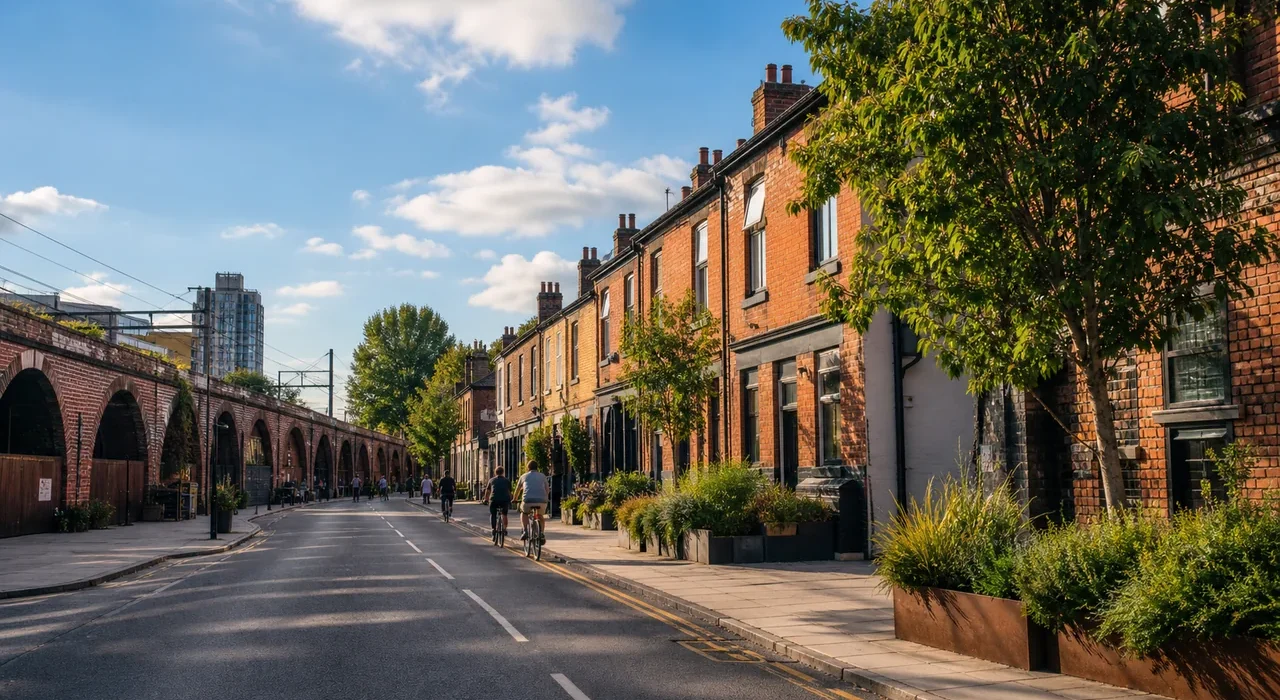
Ardwick sits in an awkward position in Manchester’s geography and its story. It’s close enough to the city centre (ten minutes to Piccadilly) to have been earmarked for regeneration multiple times, but working-class enough and unfashionable enough to have been passed over every time. The result is a neighbourhood that has maintained its character through neglect rather than design.
The Manchester Apollo
The Manchester Apollo on Stockport Road is Ardwick’s most visited landmark by some distance. The venue – a 1930s former cinema converted to live music in the 1970s – is one of the most atmospheric mid-size venues in the country. Its slightly battered interior, the balcony that feels closer to the stage than it has any right to be, and the strange curved architecture all contribute to shows feeling better here than they would in a purpose-built venue of the same capacity. Every major artist coming through Manchester plays here at some point.
Hyde Road and the Industrial Past
Hyde Road runs through Ardwick east toward Gorton and was one of Manchester’s major industrial arteries. The factory and warehouse architecture is still visible even where the buildings have been converted or cleared. The area around Ardwick Green was once middle-class Victorian suburb; the green itself survives though the houses are mostly gone.
South Asian Communities
Ardwick has a significant South Asian community, predominantly Pakistani and Bangladeshi families, with a mosque presence that reflects decades of settlement. The food available on and around Hyde Road includes proper halal butchers, a few karahi restaurants that serve the community rather than the city centre crowd, and shops carrying South Asian groceries unavailable in mainstream supermarkets.
Where Ardwick Goes from Here
Ardwick is close enough to the emerging neighbourhoods on the city’s south-eastern edge (Ancoats, New Islington, Beswick) to be in the queue for the next wave of regeneration interest. The housing stock is mixed, with genuine Victorian terraces sitting alongside post-war replacements. For now it remains one of the more authentic inner Manchester neighbourhoods – worth knowing about before the coffee shops arrive.
Related Manchester guides
Corrections
Spotted something wrong? Send a correction.